Last updated October 30, 2026
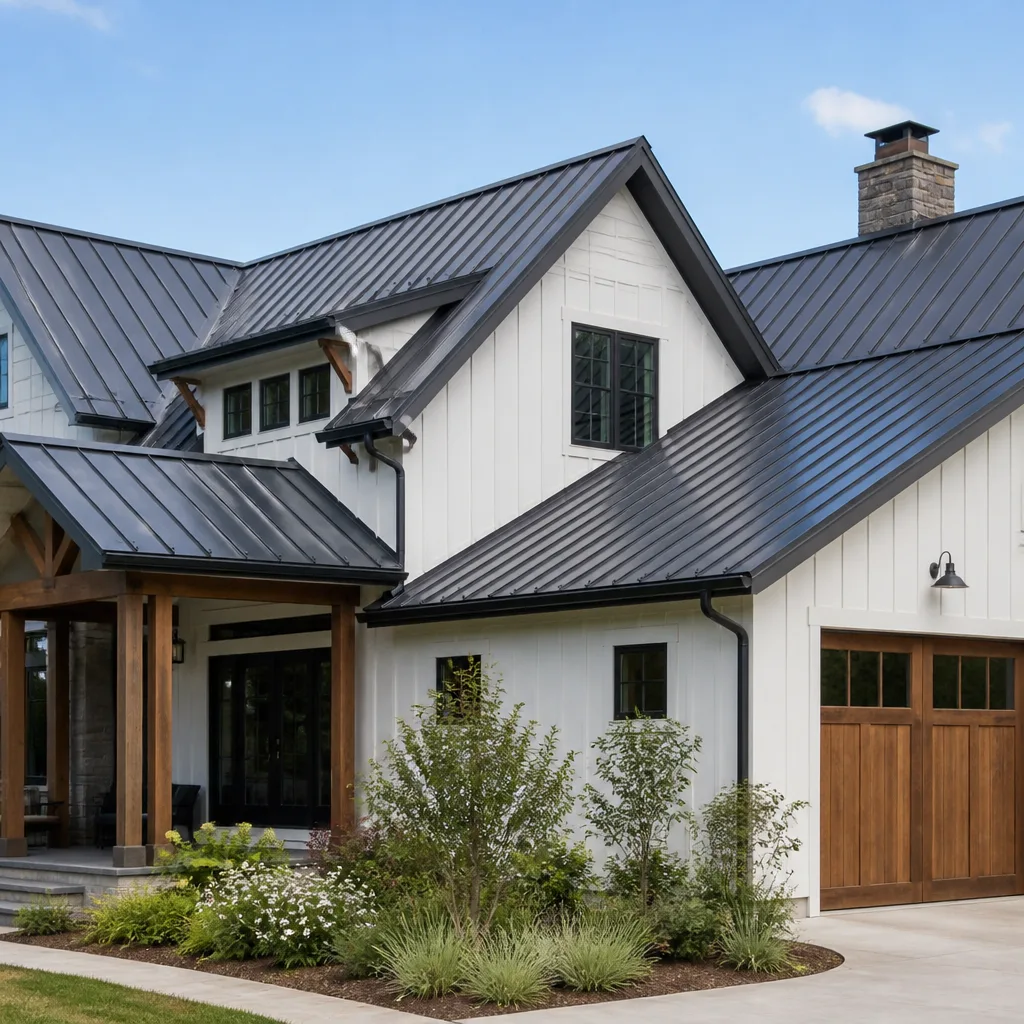 Metal roofing
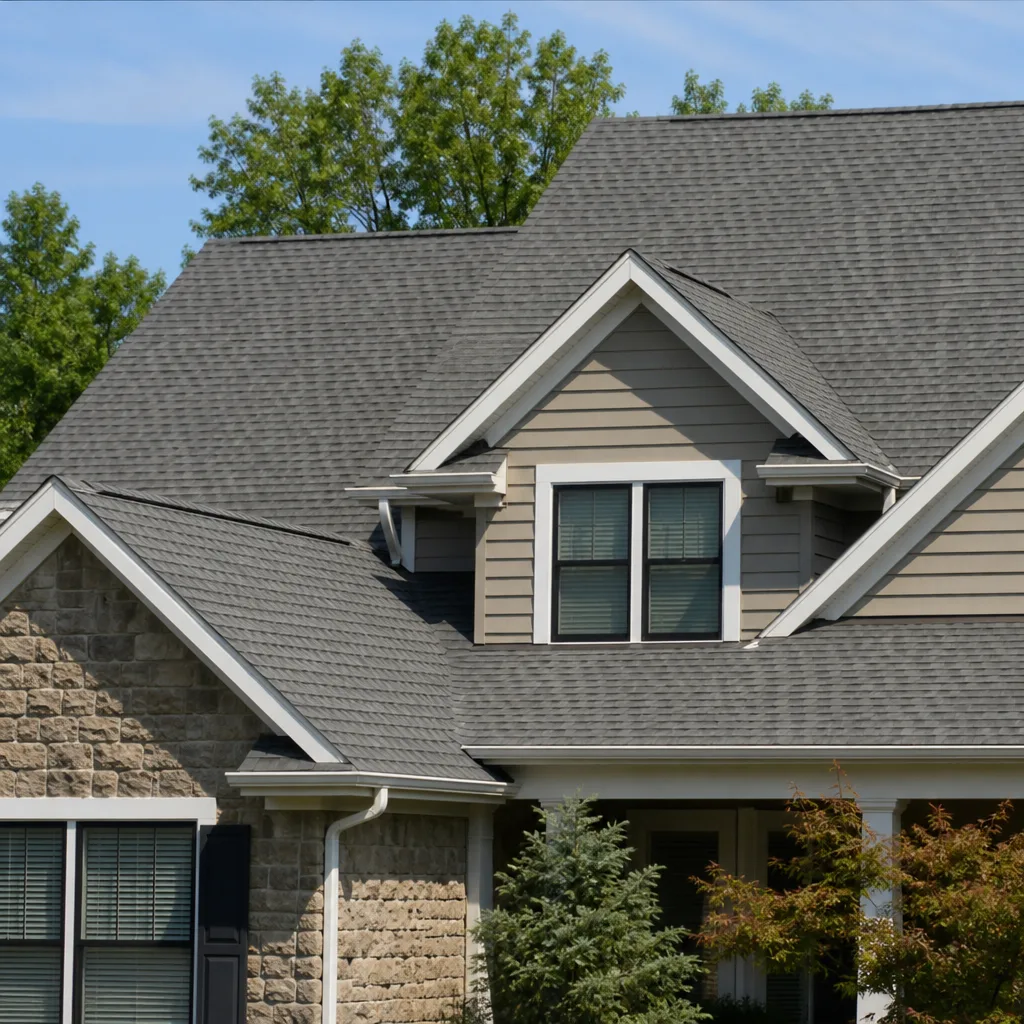 Architectural shingles
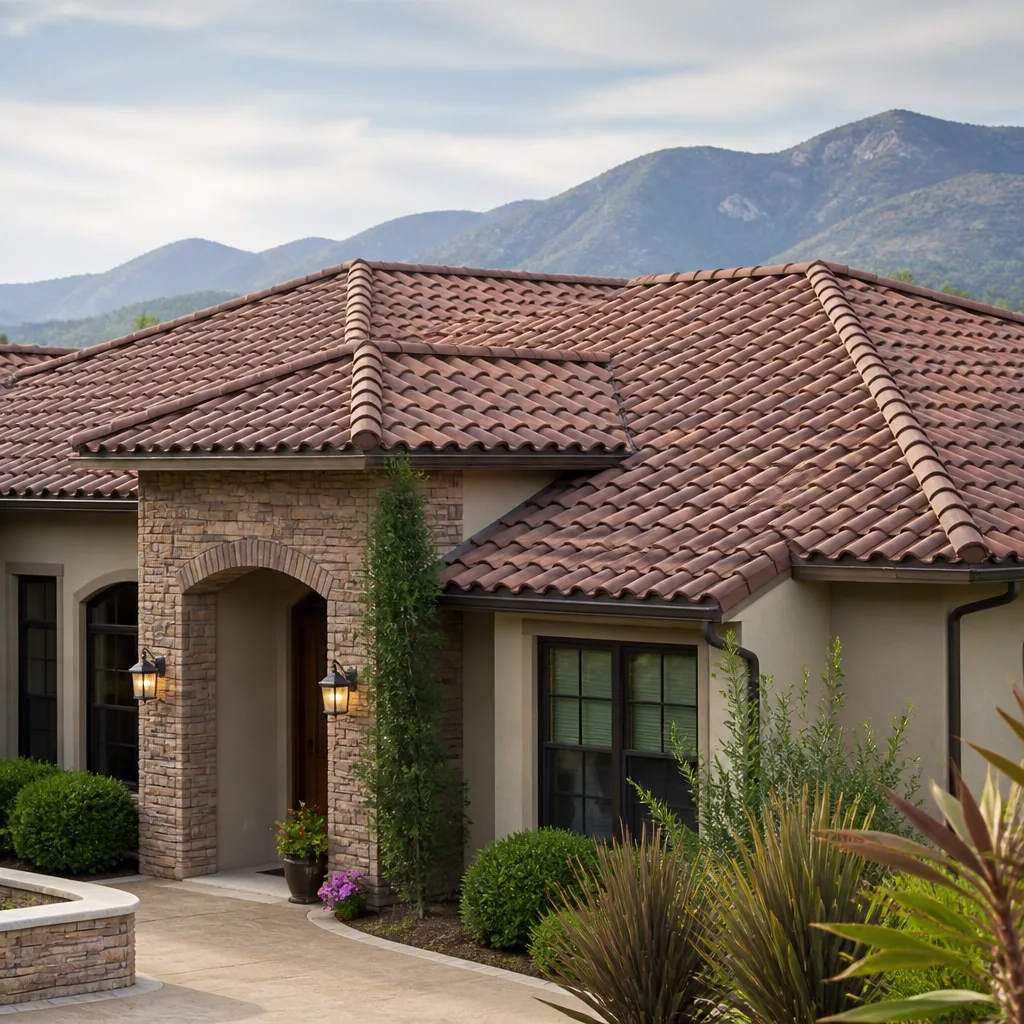 Tile roofing
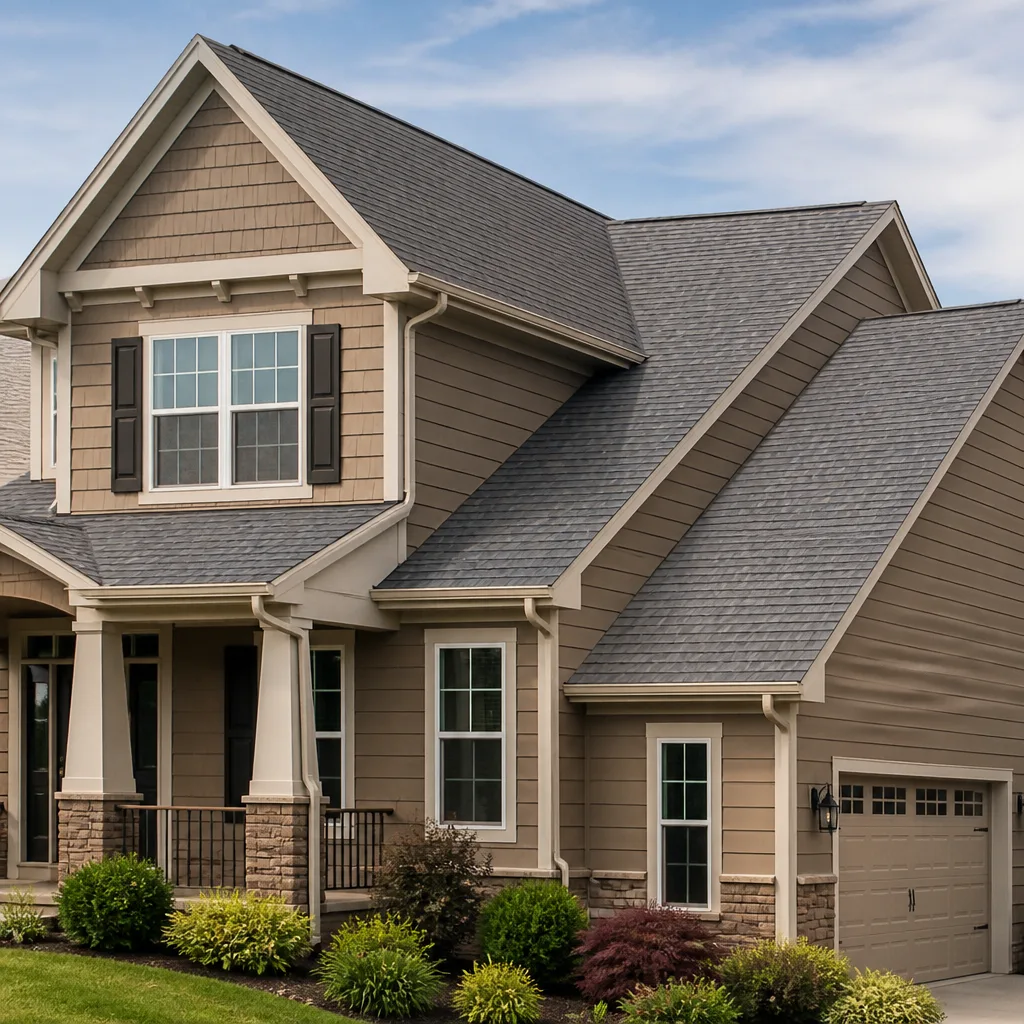 GAF
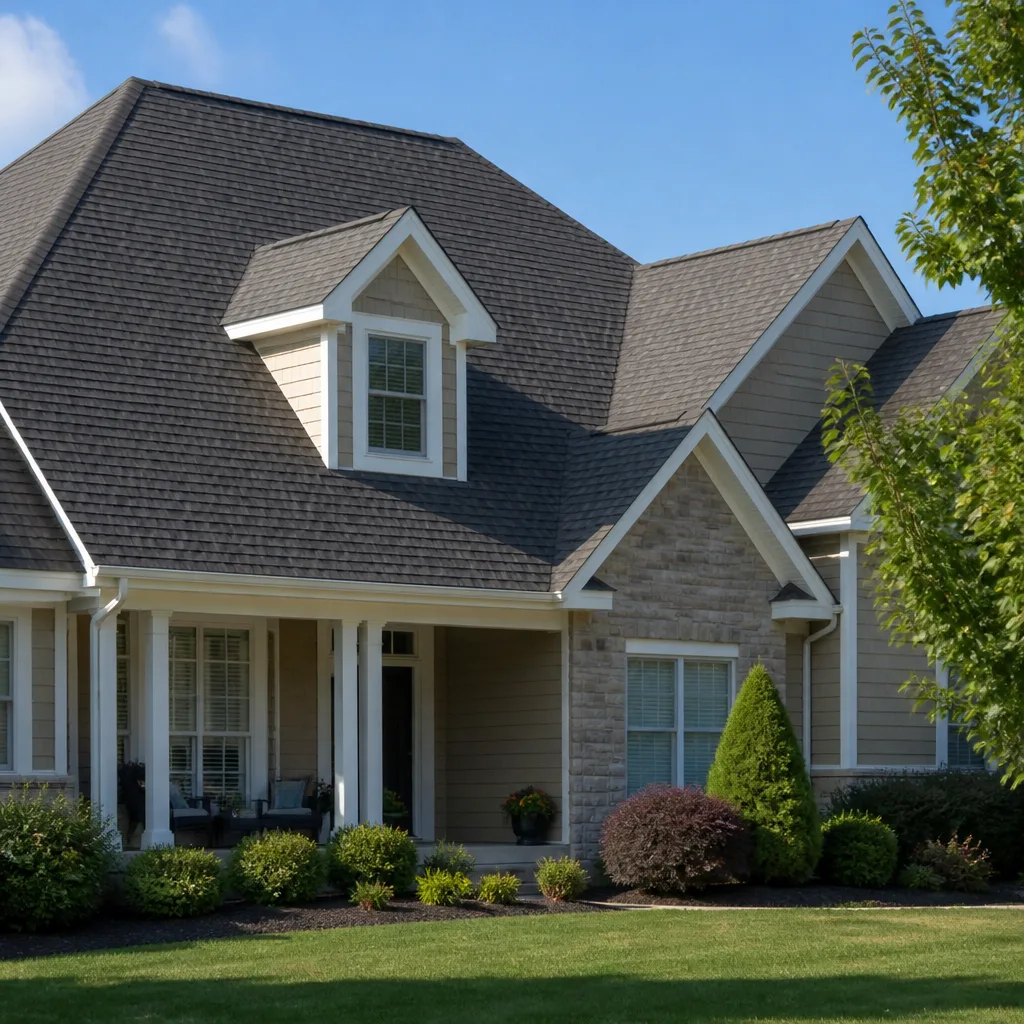 Owens Corning
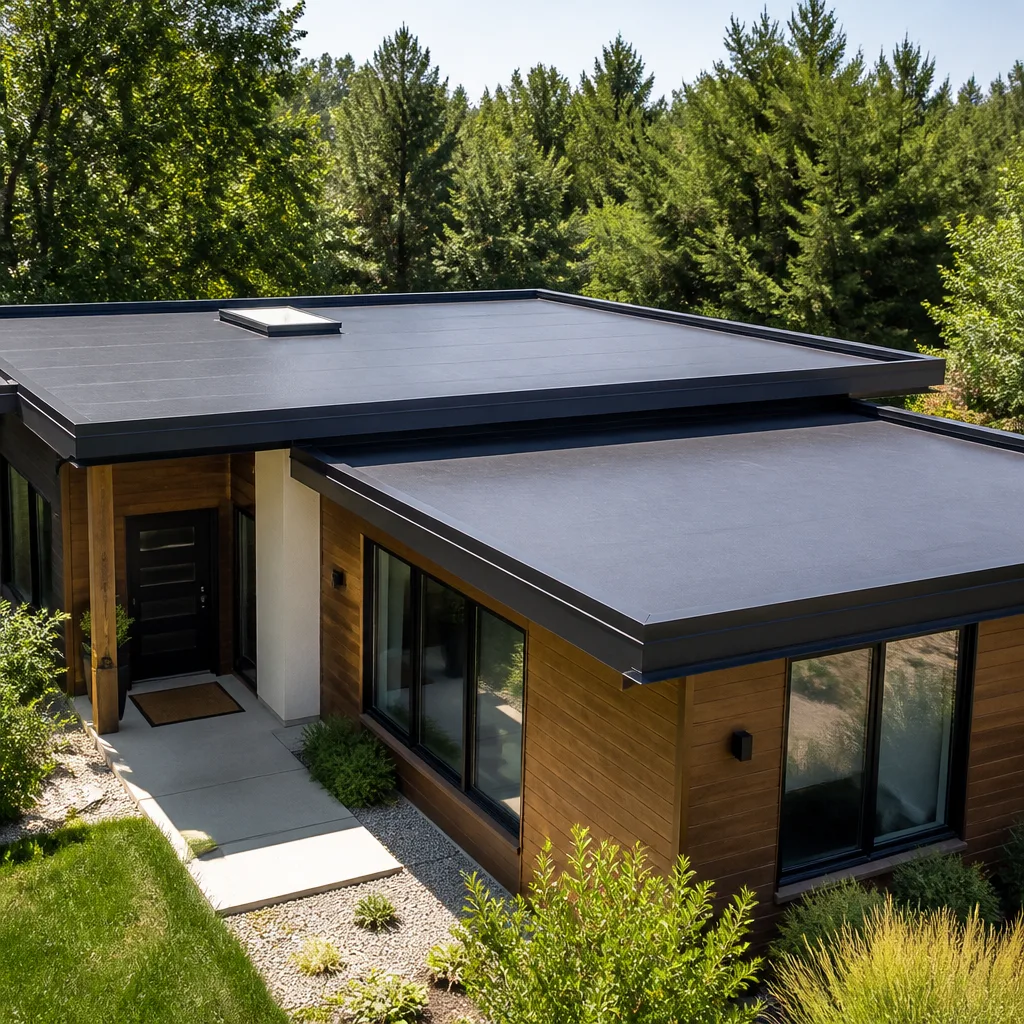 Flat & low-slope
Free roof inspection with deck photos before we talk money - GAF and Owens Corning certified installation
DIY vs Professional Roofing: The Inglewood Homeowner’s Decision Guide
The most expensive roof repair in Inglewood is the one done twice. Homeowners who climb onto a roof to save labor costs often discover that the real expense isn’t the shingles or the tear-off – it’s the permit violation, the voided manufacturer warranty, and the water damage insurance won’t cover because the work lacked a licensed contractor’s signature. This guide walks through the actual decision framework: what California law permits, what your insurance policy quietly prohibits, and where the honest break-even point sits for Inglewood homes built before 1970. For related reading, see our Roof Repair Troubleshooting: Common Problems and How to Fix Them. You’ll leave with a clear sense of which jobs you can safely take on and which ones belong in the hands of a roofing-only contractor.
Styles & brands we work with
Quick Answer
For most Inglewood homeowners, professional roofing is the financially safer choice – not because the labor is impossible to learn, but because DIY installation voids most shingle manufacturer warranties, violates the terms of many homeowner’s insurance policies for subsequent water damage claims, and exposes you to structural surprises on pre-1970 homes that can turn a weekend project into a six-week rebuild. Minor flashing repairs and single-course shingle replacement are genuinely viable DIY tasks for skilled homeowners who understand the limits. Everything beyond that – especially full tear-offs, structural repairs, and any work requiring a permit – belongs with a licensed contractor. If you’re evaluating contractors, our How to Hire a Roofing Contractor in Inglewood: A Step-by-Step Guide offers a practical framework.
Table of Contents
- What California and Inglewood Actually Allow a Homeowner to Do
- The Honest List: DIY Tasks That Make Sense
- The Honest List: DIY Tasks That Don’t
- The Pre-1970 Inglewood Hidden-Scope Problem
- How DIY Voids Warranties and Insurance Coverage
- The True Cost Comparison: DIY vs Professional
- Common Mistakes to Avoid
- When to Call a Professional
- Frequently Asked Questions
- The Bottom Line
What California and Inglewood Actually Allow a Homeowner to Do
California is one of the states where a homeowner can legally pull their own building permit for roofing work on a property they live in. The owner-builder exemption in California’s Business and Professions Code allows a residential property owner to act as their own contractor for work on their primary residence. That’s the headline. The fine print is less friendly.
Inglewood, like most cities in Los Angeles County, enforces California Building Code Chapter 15 for roofing. Any roof replacement – full tear-off or recover – requires a city permit. Repairs under 100 square feet generally do not. So a homeowner who wants to replace their entire roof can legally file as an owner-builder, pull the permit from Inglewood’s Building and Safety Division, and do the work themselves. It’s legal. It’s also, in most cases, a poor financial decision, because of what the owner-builder exemption does not protect you from – and that’s detailed in the sections below.
There’s also a hard restriction most guides miss: the owner-builder exemption only applies to work on a property you personally occupy as your primary residence. If you own a rental property in Inglewood, a duplex, or any structure you don’t live in, you cannot legally act as owner-builder for roofing work. You must hire a licensed contractor. This catches a lot of Inglewood landlords off guard, especially those with converted garages or ADU setups.
What about the CSLB? The Contractors State License Board doesn’t license DIYers – it disciplines unlicensed contractors. The relevant line for homeowners is this: anyone who accepts money for roofing work in California must hold a C-39 roofing license from the CSLB. If someone offers to do your roof for cash without a license, they’re operating illegally, and any warranty they give you is worthless. For the purposes of this guide, the point is simple: you, as the homeowner, can do your own roofing work legally on your primary residence. But you’re then carrying the entire legal and financial liability of that work yourself.
The Honest List: DIY Tasks That Make Sense
Some roofing tasks genuinely fall within a skilled homeowner’s reach. The key word is skilled – if you’ve never worked on a roof, start with a roof inspection in Inglewood to understand what you’re dealing with before touching anything. Here’s what we’d consider reasonable DIY territory, with the caveats attached to each.
1. Minor Flashing Repair
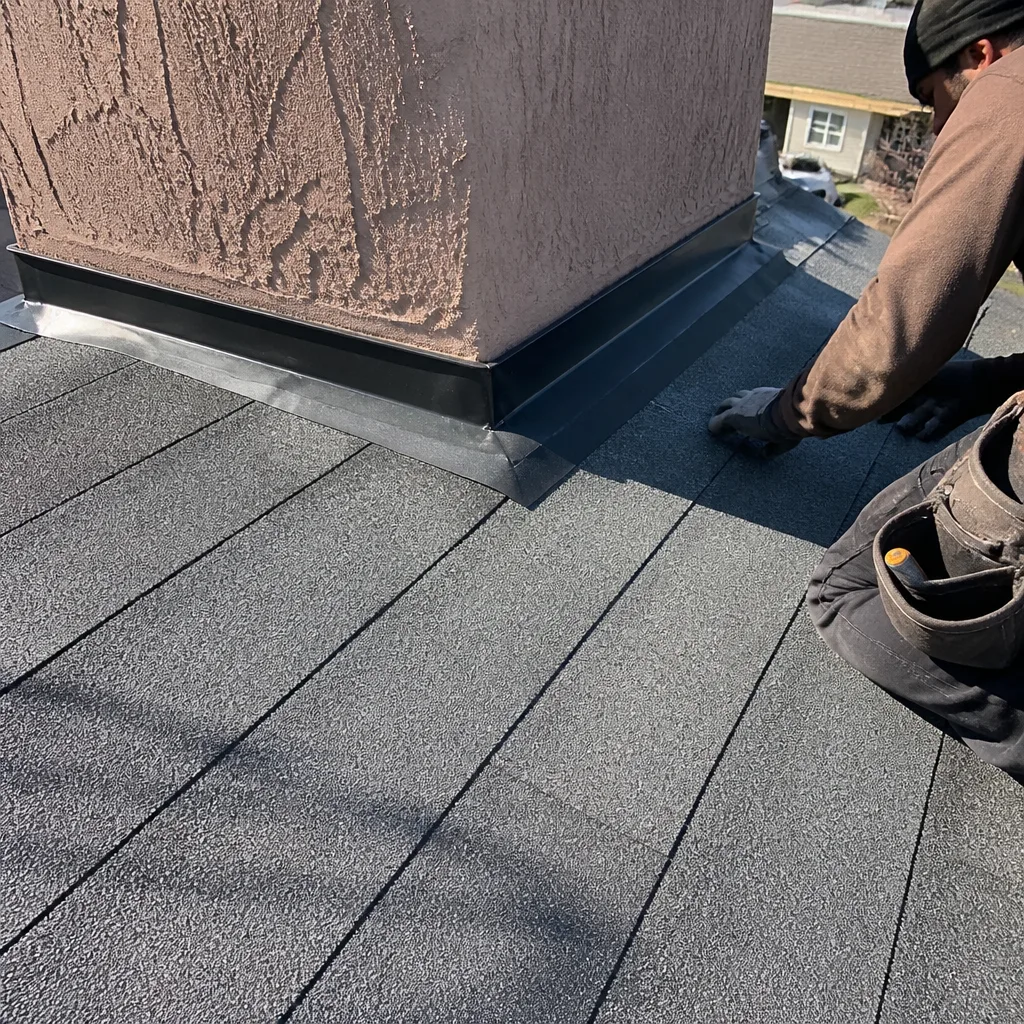
L-shaped step flashing around a chimney or vent pipe that has come loose can often be resecured with roofing cement and replacement fasteners. This is a one-hour job if the flashing hasn’t rusted through. If it has, replacement flashing requires lifting shingles and cutting to fit – which is doable but moves into moderate territory. The risk is low: you’re working at the roof edge or around a penetration, not tearing off large sections.
2. Single-Course Shingle Replacement
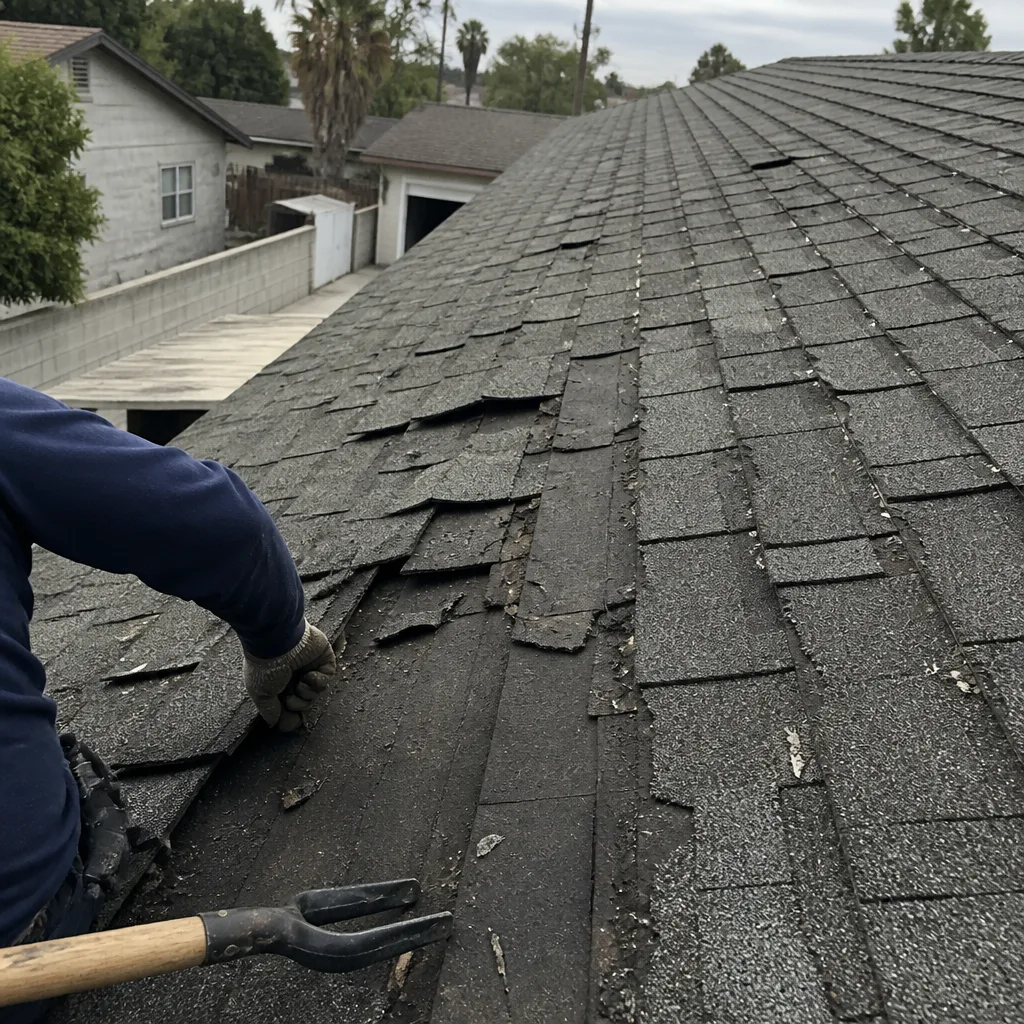
Replacing one or two damaged asphalt shingles is the classic DIY roofing job. You need a flat pry bar, a hammer, roofing nails, and replacement shingles that match your existing roof. The challenge in Inglewood specifically is finding a true color match – roofs here fade differently than roofs in coastal fog zones. If you can’t find the exact shingle, a visible patch looks worse than the original damage. This is where a multi-brand contractor has a practical advantage: material match is a real skill, not a marketing line.
3. Gutter Cleaning and Downspout Clearing
This is roofing-adjacent but prevention-critical. Clogged gutters in Inglewood’s occasional heavy rain events cause water to back up under the eave line and rot the fascia. Cleaning gutters twice a year is a safe, simple DIY task that extends roof life meaningfully.
4. Visual Inspection After Storms
After a heavy wind event, you can safely check from the ground or a ladder for missing shingles, lifted edges, and debris accumulation. You don’t need to walk the roof to spot obvious damage. If you see something concerning, mark it mentally and call for a professional assessment.
The common thread: these tasks involve one shingle, one flashing piece, one gutter. They don’t require tearing off roofing material in bulk, they don’t touch the structural deck, and they don’t require a permit. They also carry manageable risk if you work safely and respect height hazards.
Safety Caveat That Must Be Said
Working on a roof is inherently dangerous. Falls from roofs account for a significant share of construction fatalities in California each year. Inglewood’s older homes often have steep pitches – 8:12 or steeper on some of the Spanish-style and Craftsman-era homes near Rogers Park and Centinela Heights. If your roof pitch is steep enough that you can’t comfortably stand without bracing, do not work on it. The cost of a pro is nothing compared to the cost of a fall. The same applies to any work near power lines, which run to many Inglewood homes via above-ground service drops at the roofline.
The Honest List: DIY Tasks That Don’t Make Sense
The following tasks are where DIY roofing stops being about skill and starts being about structural, legal, and financial liability. These are not tasks you should attempt, regardless of your confidence level.
1. Full Tear-Off and Replacement
Removing an entire roof and installing a new one is a 2-5 day project for a professional crew of three to five people. For a solo DIYer, it’s 2-5 weeks. The roof is exposed the entire time. Inglewood gets less than 15 inches of rain a year, but when it rains, it rains hard – and an exposed roof deck during a January storm means water damage to insulation, drywall, and electrical. A professional crew doesn’t avoid the weather problem; they manage it with tarps, sequencing, and crew power. A homeowner working solo simply can’t close a roof back up fast enough when a storm rolls in.
2. Structural Repairs
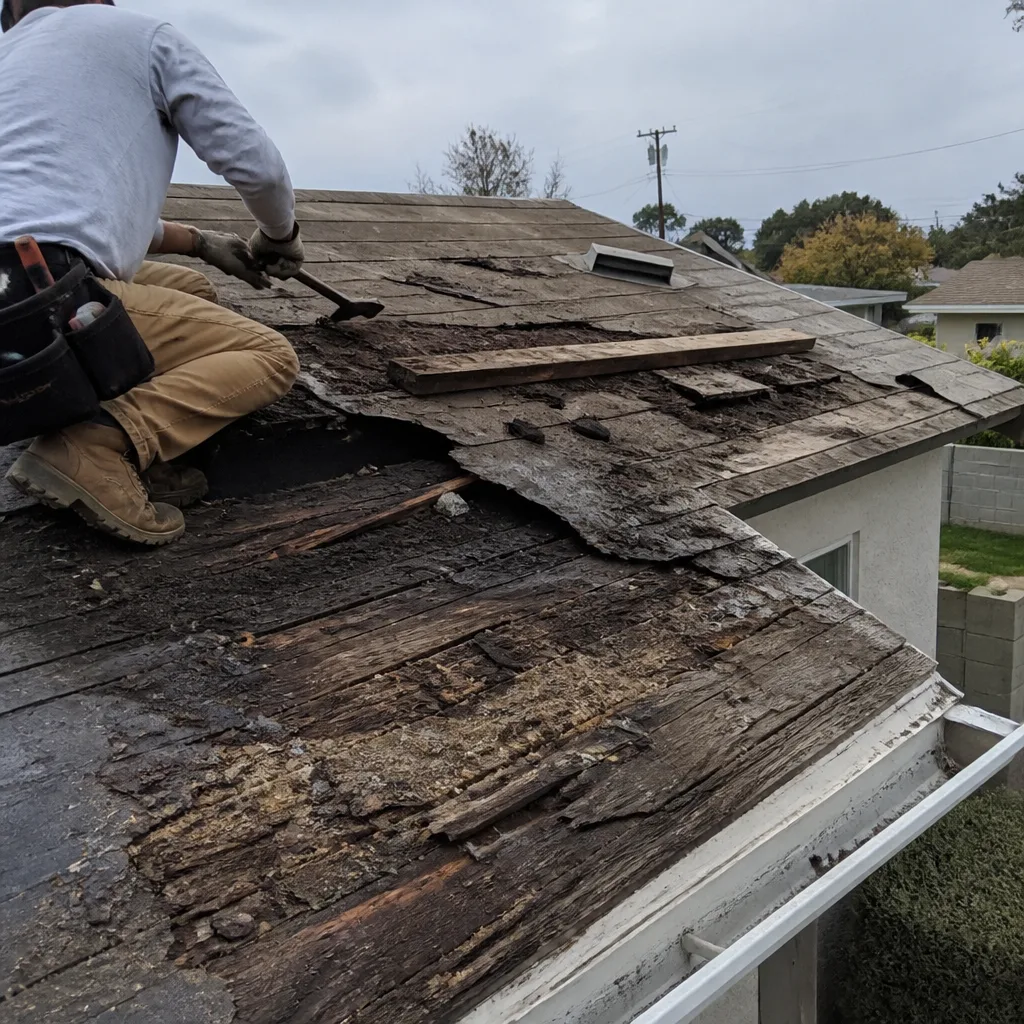
If the decking, rafters, or trusses under your shingles are rotted, sagging, or termite-damaged, you need a structural assessment. Inglewood’s termite pressure is significant – drywood termites are endemic in Southern California and they eat roof sheathing and rafters. A DIYer can replace a sheet of plywood. A DIYer cannot safely evaluate whether a rafter needs sistering or full replacement. That’s engineering territory, and the liability of getting it wrong falls entirely on you.
3. Work on Roofs with Two or More Layers
Many older Inglewood homes have roofs that were recovered – a second layer of shingles installed over the original instead of tear-off. California building code limits roofs to two layers of asphalt shingles. If you already have two layers and attempt to add a third, the permit doesn’t get approved and the roof’s structural load increases beyond what the framing was designed for. Inglewood’s older homes, particularly those built before 1950, often weren’t engineered for even two layers. You don’t know what you’re looking at until the layers come off.
4. Any Work Involving Permission or Insurance
This is the broad catch-all: if the work requires a permit, or if you plan to file an insurance claim for the work, a DIY approach introduces complications that erase any labor savings. More on both of these below.
The Pre-1970 Inglewood Hidden-Scope Problem
Inglewood’s housing stock is old. A significant share of single-family homes in this city were built between 1920 and 1969 – the classic California bungalow, Spanish Revival, and early ranch homes that define neighborhoods like Morningside Park and Arbor Village. Those homes have roofing conditions that newer construction doesn’t. When you tear off shingles on a home from this era, you don’t know what you’ll find underneath. And what you find can change the entire scope of the project.
Skip Sheathing
Many pre-1970 Inglewood homes have skip sheathing – also called spaced sheathing or open sheathing – instead of solid plywood or OSB decking. Skip sheathing is made of 1×6 or 1×8 boards installed with gaps between them. It was standard practice for wood shake and early asphalt shingle roofs. Modern architectural shingles are engineered for installation on solid decking. Installing them over skip sheathing violates manufacturer installation requirements and voids the warranty immediately. The fix is to install solid decking over the skip sheathing – which adds material and labor cost, and requires an inspection before it’s covered. A DIYer who discovers skip sheathing mid-tear-off has two choices: install shingles over it and void the warranty, or stop, buy plywood, and redo the decking – adding days and thousands of dollars to the project. A professional roofer knows to check for this before the tear-off begins, not after.
Knob-and-Tube Wiring Proximity
Inglewood homes built before roughly 1935 may still have knob-and-tube electrical wiring in the attic. Knob-and-tube is legal to maintain in California but dangerous to disturb. Roofing work that involves walking through the attic, pulling nails through the decking, or tearing off sheathing can easily damage the brittle cloth insulation on knob-and-tube conductors. Damaged knob-and-tube is a fire hazard. A roofing contractor who’s worked on older Inglewood homes knows how to identify potential knob-and-tube presence and work around it. A first-time DIYer sees wires and doesn’t know what they’re looking at until a problem appears.
Asbestos-Containing Materials
This is the one that gets missed most often. Some pre-1970 built-up roofs and old cap sheets in Inglewood contain asbestos. Asbestos was used in certain roofing felts, flashing compounds, and cap sheet materials until the late 1970s. Disturbing asbestos-containing roofing material during a DIY tear-off releases fibers into the air – and into your home, your neighbor’s yard, and your lungs. Professional roofing companies in California are trained to identify suspect materials and follow the required abatement protocols when found. A homeowner who tears off an old flat roof on a 1950s-era Inglewood home and discovers asbestos where the gravel cap used to be has just created an environmental hazard on their own property, with no easy or cheap path to resolve it. This alone is a strong argument for professional handling of any full tear-off on older Inglewood construction.
How DIY Voids Warranties and Insurance Coverage
The buried detail that DIY roofing guides consistently omit: most shingle manufacturer warranties require installation by a licensed contractor to be valid. GAF, CertainTeed, Owens Corning, and other major manufacturers all write this into their warranty documents. The warranty language varies by product line, but the principle is consistent: installation errors are the leading cause of premature roof failure, and manufacturers won’t cover a product that was installed by someone without demonstrated competence.
Here’s what that looks like in practice. You buy $4,000 worth of architectural shingles from a supply house in Inglewood. You install them yourself. Six years later, the shingles start curling and cracking prematurely – a manufacturing defect that would normally be covered under a 30-year or 50-year warranty. You file a claim. The manufacturer asks for proof of licensed installation. You can’t provide it. The claim is denied. You now own a failing roof with zero recourse, and the replacement comes entirely out of your pocket.
The insurance angle is equally serious. Most homeowner’s insurance policies in California contain language requiring roof repairs and replacements to be performed by licensed professionals to remain covered. If your DIY roof leaks and causes interior water damage, your insurance adjuster will ask who installed the roof. When the answer is “the homeowner,” the water damage claim is frequently denied on the grounds of improper installation. This isn’t speculative – it’s a consistent pattern in California insurance claims. The $3,000 to $6,000 you saved on labor can easily become a $15,000 to $40,000 water damage claim that insurance won’t touch.
There’s also the liability angle. If you’re a DIY roofer and a nail you dropped causes a flat tire on a neighbor’s car, or a shingle you loosened blows off in the wind and damages a neighbor’s window, you’re personally liable. A licensed contractor carries liability insurance for exactly this scenario. Homeowners doing their own roofing work generally don’t.
The True Cost Comparison: DIY vs Professional
The classic DIY argument is simple: professional roofing costs $12,000, materials cost $5,000, so DIY saves $7,000. That math ignores most of the real cost. Here’s a realistic comparison for a typical 1,800-square-foot Inglewood home with a standard asphalt shingle replacement.
DIY Full Replacement: The Real Numbers
- Materials (shingles, underlayment, nails, flashing, ridge cap): $5,000 to $7,500 depending on shingle grade
- Inglewood permit fees: $300 to $600 for a residential reroof permit
- Dumpster rental for tear-off waste: $400 to $700 for a 20-yard bin, plus possible overage charges
- Tool rental or purchase (nail gun, compressor, roofing shovel, ladder, harness): $300 to $1,000
- Material waste rate for first-time DIY: 15% to 25% versus professional 5% to 8% – this adds $750 to $1,500 in wasted product
- Realistic probability of contractor call-back for correction: high – budget $1,500 to $3,000 for fixes
- Your own labor, assuming a 3-4 week solo timeline: unpaid, but it displaces paid work or family time
When you account for waste, dumpster fees, tools, and the very likely call-back repair, the realistic DIY cost for a full replacement lands between $8,000 and $12,000 – before assigning any value to your own labor. The professional quote for the same roof in Inglewood typically ranges from $12,000 to $18,000, depending on material grade, roof complexity, and deck condition. The gap is narrower than most DIY enthusiasts expect, and the professional price includes licensed installation, manufacturer warranty validity, insurance coverage, and a project that completes in under a week.
Where DIY genuinely wins is on small repairs. Replacing two damaged shingles yourself costs $50 in materials and two hours of work. A service call from a roofing company might run $300 to $500 minimum. That’s where the skill-to-cost ratio favors the homeowner. The honest framework: DIY the shingle, hire the roof.
For a more detailed breakdown of what professional replacement involves, see our guide to roof replacement in Inglewood.
Common Mistakes to Avoid
- Not checking the roof’s current layer count before starting. If your Inglewood home already has two shingle layers, you can’t legally add a third. You need a full tear-off, which is not DIY territory for the reasons covered above.
- Ignoring the permit requirement for recover work. Even a “simple” shingle-over needs a permit in Inglewood if it exceeds 100 square feet. Unpermitted roofing work becomes a disclosure issue when you sell the home and a red flag for any future insurance claim.
- Assuming manufacturer warranties cover DIY installation. They almost universally don’t. The warranty document’s fine print is where the exclusion lives, and the exclusion is total.
- Attempting a full tear-off solo without tarping capability. When the sky opens up mid-project – and in Inglewood, winter rains can arrive with little warning – an untarped exposed deck is a water damage disaster.
- Underestimating the physical toll. Roofing is punishing work. Thirty hours of lifting, kneeling, and hammering on a pitched surface will find every physical weakness you have. Many DIYers abandon the project midway, leaving an exposed roof that must be handled as an emergency.
- Buying mismatched shingles for a repair. A shingle that matches in the store won’t necessarily match after Inglewood’s sun has faded your existing roof for eight years. A professional contractor with multiple manufacturer lines can get closer than a homeowner picking from a single supply-house inventory.
- Skipping the inspection to save money. A professional roof inspection in Inglewood costs a few hundred dollars and tells you exactly what you’re dealing with. Starting a DIY project without one is guessing with your home’s most important structure.
When to Call a Professional
Call a licensed roofing contractor when any of these applies: your roof has two layers and needs a tear-off; you’ve found structural damage, sagging, or termite intrusion in the decking; your home was built before 1970 and you’re planning a full replacement; the work requires a permit; you plan to file an insurance claim; you have a steep roof pitch over 6:12; or you simply don’t want to carry the liability of an improper installation. These aren’t edge cases – they describe the majority of serious roofing work in Inglewood. Chatham Roof Repair offers roof repair in Inglewood with a diagnosis-first approach: we look for the repair before we recommend the replacement. We install products from GAF, CertainTeed, Owens Corning, and Boral – four of the seven manufacturer brands we work with – so replacement or repair materials are matched to your existing roof system, not forced into a one-brand box. Inspection, repair, or full replacement – one company, start to finish. Call (866) 361-1724 for a free estimate.
Frequently Asked Questions
Yes. Any roof replacement in Inglewood – whether full tear-off or recover – requires a city building permit, regardless of whether you do the work yourself or hire a contractor. Repairs under 100 square feet generally don’t require a permit. Homeowners can pull their own permit as an owner-builder for their primary residence, but the permit doesn’t protect you from the warranty and insurance issues covered in this guide. Call (866) 361-1724 if you’re unsure whether your project needs a permit – we’ll point you in the right direction.
A professional full roof replacement in Inglewood typically runs $12,000 to $18,000 for a standard 1,800-square-foot home, depending on shingle grade, roof complexity, and deck condition. The range widens significantly if structural repairs, decking replacement, or asbestos abatement are needed. Call (866) 361-1724 for an exact quote on your roof – estimates are free.
In most cases, no. California homeowner’s insurance policies typically require roof work to be performed by a licensed professional for coverage to remain valid. Water damage resulting from a DIY install is frequently denied by adjusters on improper-installation grounds.
Skip sheathing is the most common surprise on pre-1970 Inglewood homes. Many of these homes have spaced-board decking instead of solid plywood, which violates modern shingle installation requirements. Discovering it mid-project turns a straightforward tear-off into a structural decking job.
No. California’s owner-builder exemption applies only to your primary residence. For rental properties, duplexes, or any structure you don’t personally occupy in Inglewood, you’re legally required to hire a licensed C-39 roofing contractor for permitted work.
Minor flashing resecurement, single-course shingle replacement, gutter cleaning, and ground-level visual inspection are all realistic DIY tasks for a careful homeowner. For a structured approach to upkeep, see our Roof Repair Maintenance Checklist for Inglewood Homeowners. Anything involving a tear-off, structural work, multiple layers, permits, or insurance claims belongs with a professional. Call (866) 361-1724 for a free assessment of any damage you’ve spotted.
The Bottom Line
The DIY vs professional roofing decision in Inglewood isn’t primarily about whether you can learn to install shingles. It’s about whether you want to carry the legal, warranty, insurance, and structural liability of the work yourself. For small repairs – a shingle or two, loose flashing, clogged gutters – DIY is financially rational and reasonably safe. For everything else, the hidden costs of voided warranties, denied insurance claims, and pre-1970 structural surprises erase any labor savings. Inglewood’s older housing stock makes professional handling the sober choice for most substantial roofing work. Chatham Roof Repair provides inspection, repair, and replacement under one roof, with seven manufacturer brands on the table and a repair-first diagnostic approach. Call (866) 361-1724 for a free estimate – straight answers about what your roof actually needs, and what it doesn’t.
Written by the team at Chatham Roof Repair, serving Inglewood since 2016. Explore more guides & resources on roofing and home maintenance.
See the difference
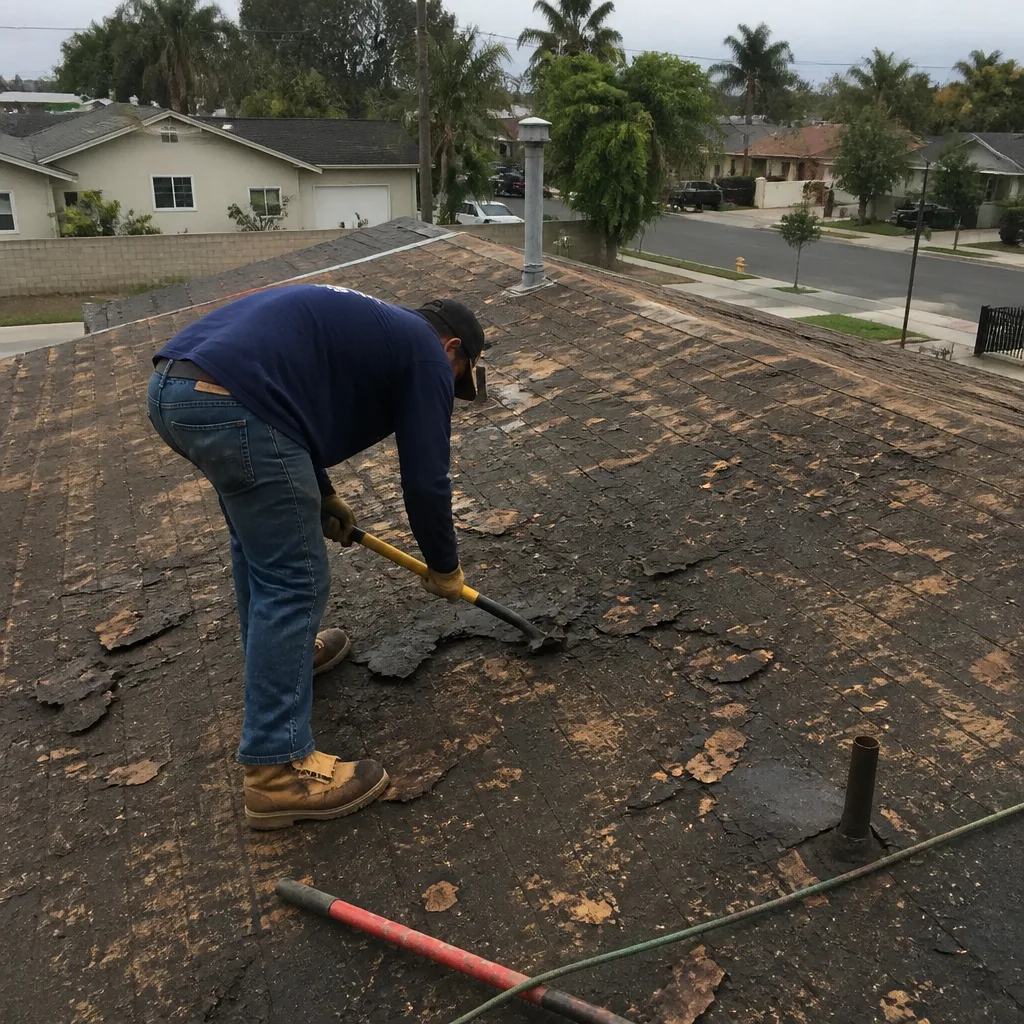 Before
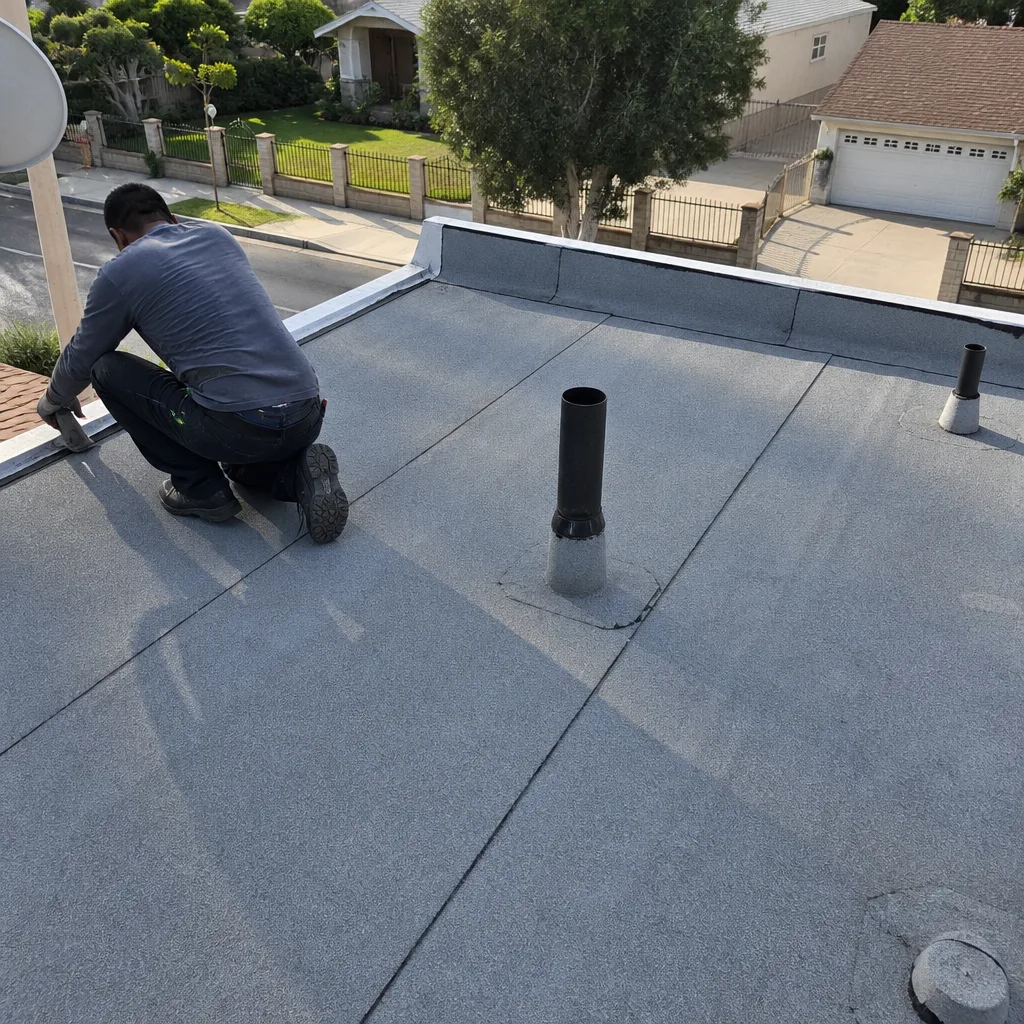 After
 Before
 After
 Before
 After