
Last updated October 30, 2026
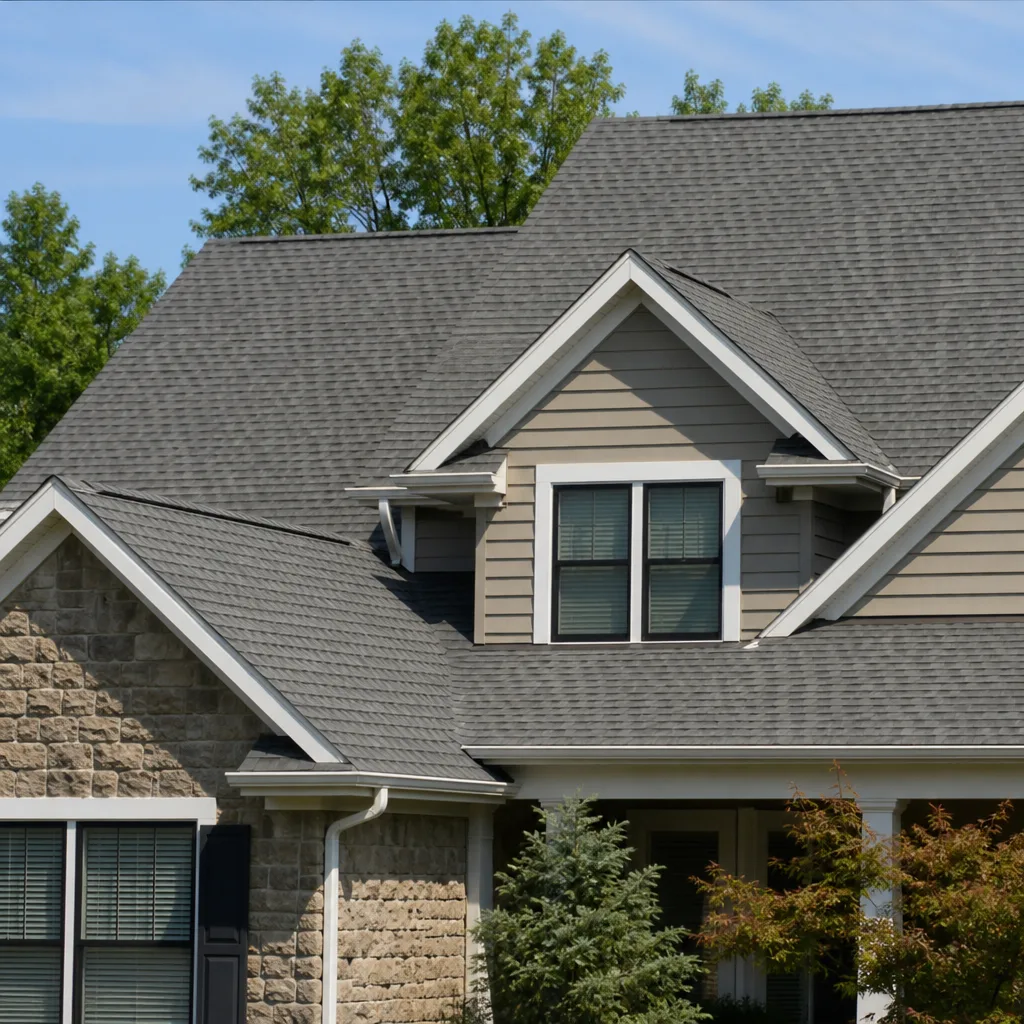 Architectural shingles
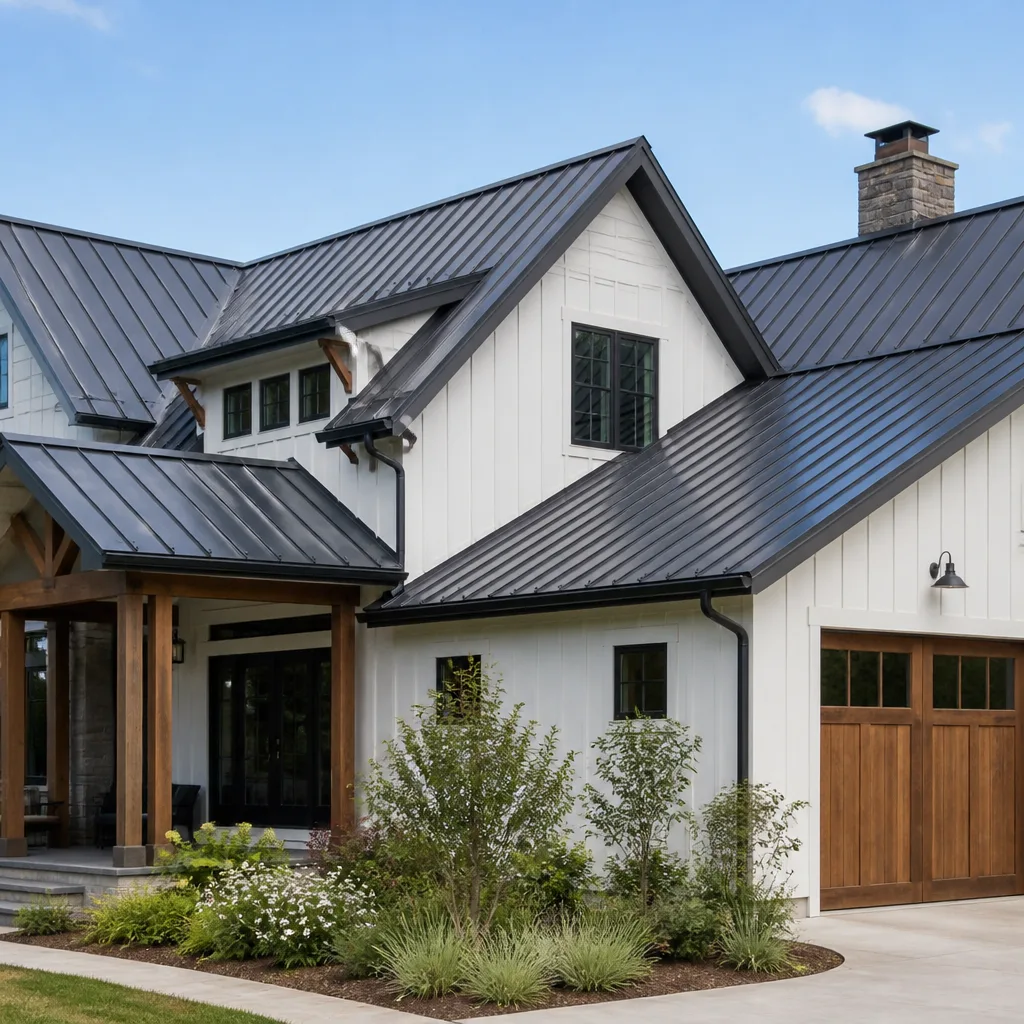 Metal roofing
 Tile roofing
 GAF
 Owens Corning
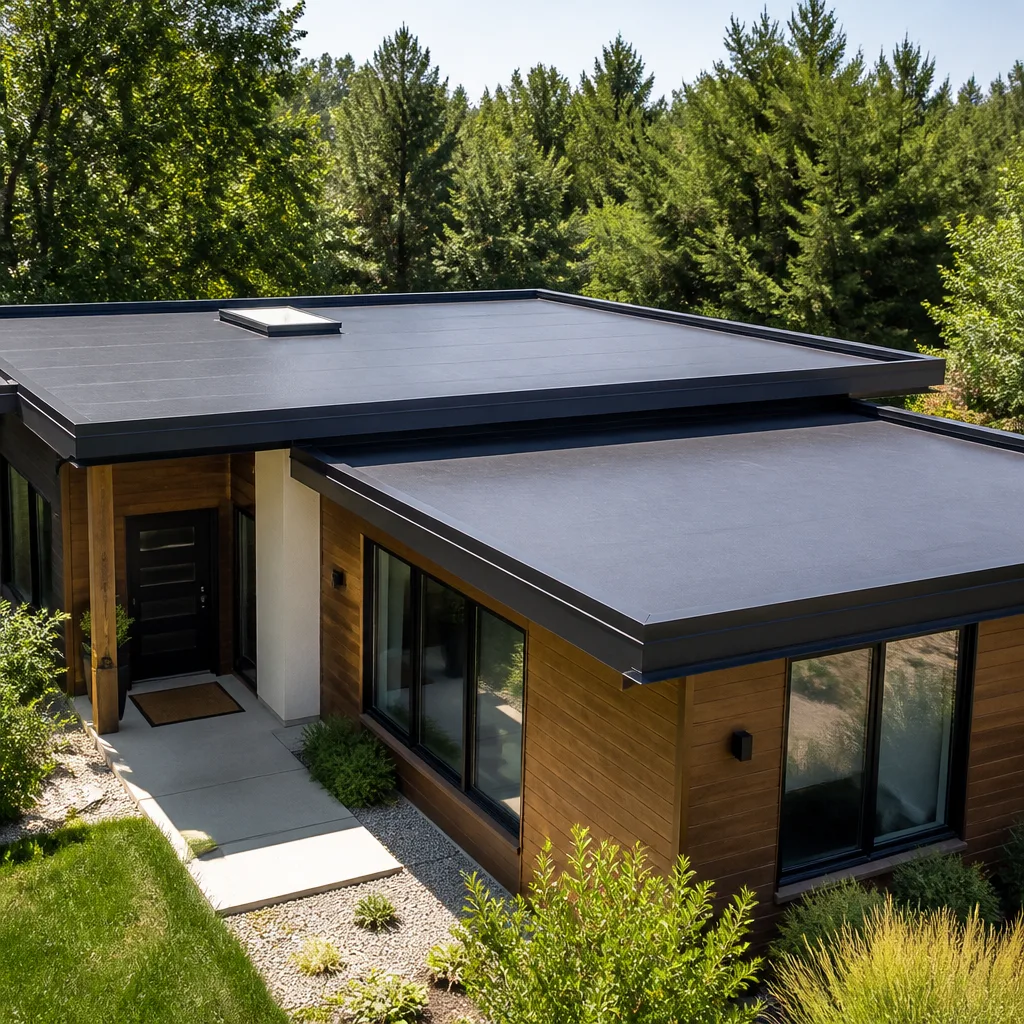 Flat & low-slope
Free roof inspection with deck photos before we talk money - GAF and Owens Corning certified installation
Roof Repair Troubleshooting: Common Problems and How to Fix Them
A ceiling stain almost never marks the spot where water entered the roof. It marks where water stopped traveling. That distinction is the difference between a repair that fixes the problem and one that just moves the stain to a new location. Contractors who patch directly under the visible stain without tracing the full flow path are billing you for a repair that will fail, often within the same rainy season. We see this pattern constantly in Inglewood, where older homes carry decades of layered roofing history and water finds creative paths through framing before it ever shows up on drywall. This guide works backward from symptom to source, so the fix actually stops the damage instead of delaying it.
Quick Answer
Roof repair troubleshooting means working from visible symptoms, like ceiling stains, curling shingles, or attic dampness, back to the actual failure point, which is often feet away from where the symptom shows up. The most common repairable problems are flashing failures at penetrations and transitions, small shingle damage from wind or impact, nail pops, and ventilation-related condensation. Each has a distinct cause that determines the correct repair approach, and misdiagnosing them leads to repeat leaks and wasted money.
Styles & brands we work with
Table of Contents
- Tracing Water Intrusion: From Stain to Source
- Flashing Failures vs. Shingle Failures
- The Three Most Misdiagnosed Roof Problems
- Symptom to Fix: A Decision Tree for Homeowners
- Leak Sources by Roof Area: What to Check First
- How Inglewood’s Climate Shapes Roof Failures
- What Roof Repairs Actually Cost in Inglewood
- Common Mistakes to Avoid
- When to Call a Professional
- Frequently Asked Questions
Tracing Water Intrusion: From Stain to Source
Water on a roof obeys gravity, but it also obeys surface tension, capillary action, and the slope of whatever it lands on. A leak that enters at the chimney flashing might travel six feet down a rafter before dripping onto insulation and showing up as a stain near an exterior wall. That stain is the exit point, not the entry point. In our experience working on Roof Repair in Inglewood, the most expensive single mistake we see is a contractor sealing the underside of a stain and calling it done.
To trace the actual entry point, follow this sequence:
- Mark the stain location on the ceiling or wall. Measure its distance from the nearest exterior wall and from the room’s corners.
- Go into the attic and locate the same point in relation to the roof deck above. Look at the underside of the roof sheathing, not just the insulation. Stains on sheathing that run along a rafter line tell you the water tracked downhill along that framing member.
- Follow the stain uphill. Water runs downslope, so the entry point is always higher on the roof plane than where it shows up. Move up along the rafter or sheathing seam until the staining fades or stops.
- Check penetrations above that point. Plumbing vents, chimney flashing, exhaust fans, skylights, and roof-to-wall transitions are the most common entry zones. A penetration uphill from your stain, even five to ten feet away, is the likely culprit.
- Map the framing direction. In many Inglewood homes built before the 1980s, rafters run perpendicular to the ridge. Water that enters at a seam in the sheathing can travel laterally along that seam before dropping. If your stain appears between rafters, check seams uphill and to the side.
This backward-tracing method works because water leaves a breadcrumb trail on the sheathing and framing. The trail might be faint, but it’s there if you look before repairs cover it up. And it’s why a repair estimate that doesn’t include attic inspection time should make you suspicious. If the contractor hasn’t traced the path, the contractor hasn’t found the leak.
Flashing Failures vs. Shingle Failures
From the attic, a flashing failure and a shingle failure often look identical: a damp patch on the sheathing near a wall or penetration. But the repairs are completely different, and applying the wrong one leaves the leak active.
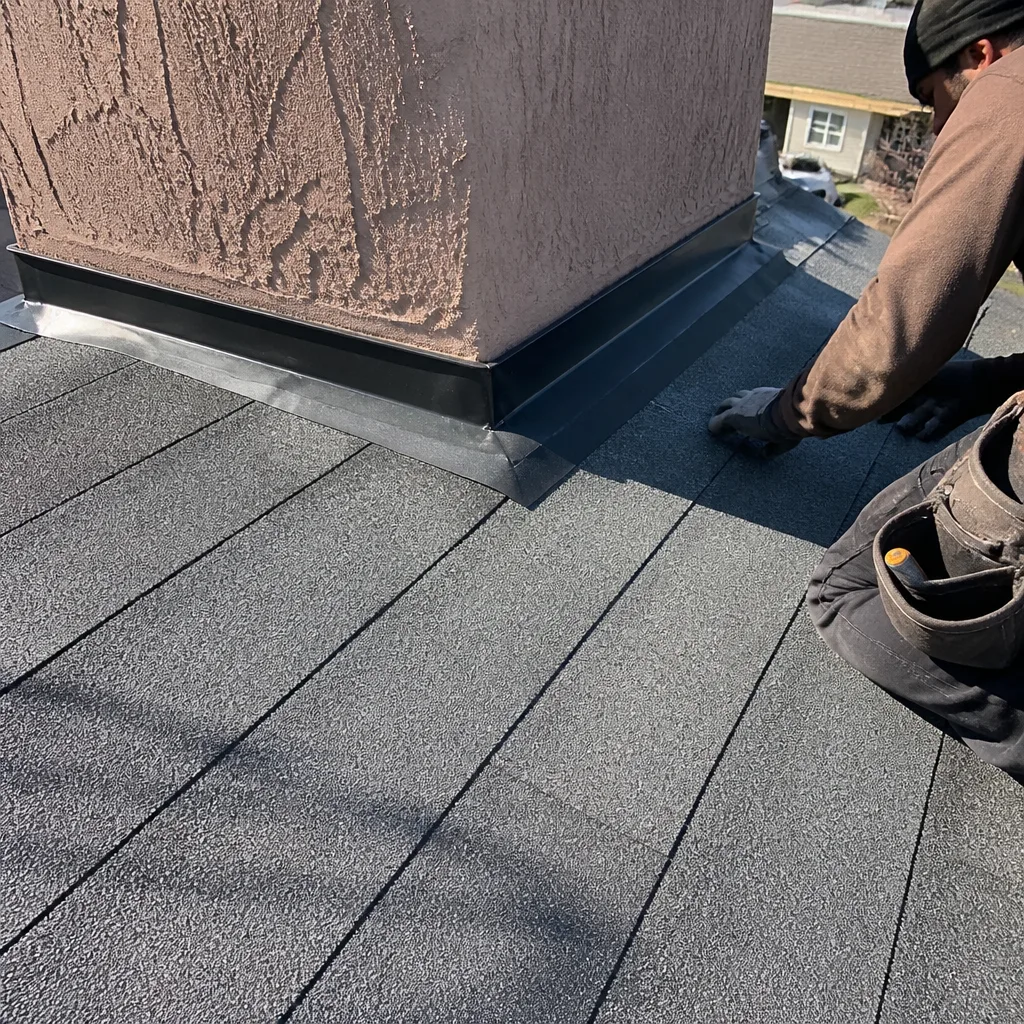
Flashing failures happen where the roof plane meets something vertical: a chimney, a wall, a skylight, a plumbing vent. The flashing is the metal or membrane transition that keeps water from running into that seam. When flashing corrodes, lifts, or separates, water gets in at the transition point. The fix is to remove the surrounding shingles, replace or reseal the flashing, and reinstall the shingles. This is a surgical repair that requires matching the existing shingle profile so the patch blends with the roof. That’s where having access to multiple manufacturers matters. We install Roof Replacement in Inglewood systems from GAF, CertainTeed, and Owens Corning, among others, which means a flashing repair can use shingles that match the existing roof instead of a cheap patch that looks like a bandage.
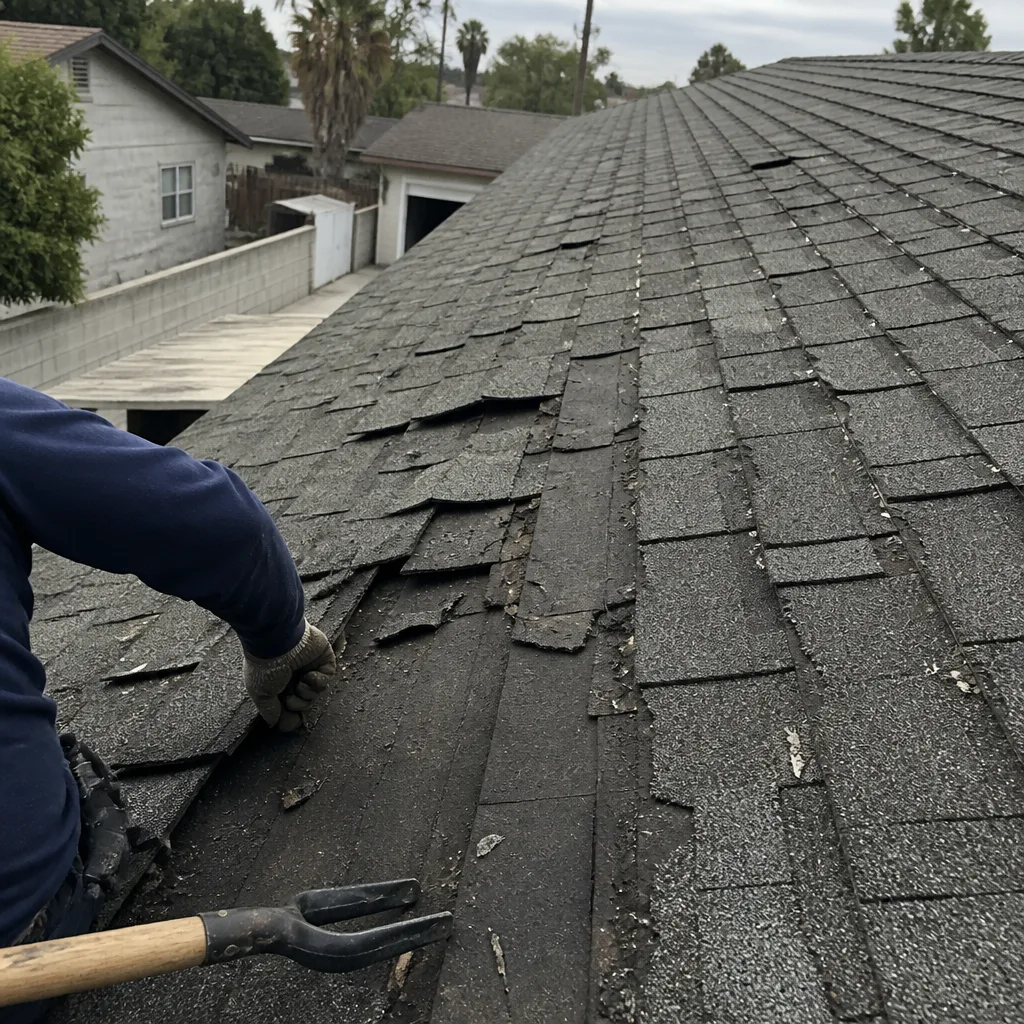
Shingle failures happen on the field of the roof itself, away from transitions. A shingle can crack from impact, tear in high wind, or lose its seal strip so water blows underneath. These failures are localized. The repair is to replace the damaged shingle or shingles, checking the surrounding area for hidden cracks or missing fasteners.
The reason these two failures get confused is that both push water into the attic, and both show up as a damp patch near a wall or penetration. The distinction matters because flashing work requires more skill, more time, and different materials than a simple shingle swap. A contractor who quotes a shingle replacement when the flashing is the problem is either guessing or avoiding the hard work.
How to tell them apart from the attic: If the dampness hugs a rafter that runs alongside a chimney or wall, suspect flashing. If the dampness is more diffuse and appears mid-field between rafters, suspect shingle damage or a sheathing seam. From outside, look for missing, cracked, or lifted shingles directly above the damp spot. If the shingles look intact, the flashing is the better suspect.
The Three Most Misdiagnosed Roof Problems
Three conditions account for a large share of incorrect roof diagnoses. Homeowners get told they need replacement when they need a repair, or told they need a repair when they actually need ventilation work.
1. Blistering Called Storm Damage
Blisters are small raised bumps on shingle surfaces, typically appearing in clusters. They form when moisture gets trapped in the shingle mat during manufacturing and expands when heated, or when excessive attic heat cooks the shingle from below. Insurance adjusters and unqualified contractors sometimes call blisters “hail damage” because both leave round marks. But hail hits with impact force that breaks the granule surface and leaves a bruise you can feel – a soft indentation. Blisters are raised, not indented, and they don’t expose the mat the way hail does. Blistering is a manufacturing or ventilation issue. It rarely leaks on its own and rarely justifies a full roof replacement unless it’s widespread enough to compromise the shingle’s UV protection. If someone points at blisters and says “storm damage,” ask for a close-up photo and a physical test.
2. Nail Pops Called Impact Damage
A nail pop happens when a roofing nail gradually works its way up out of the decking. The nail head pushes against the underside of the shingle above it, creating a small tent. From the ground, it can look like impact damage, a tiny pockmark or raised spot. But nail pops are mechanical, not weather-related. They happen for a few reasons: nails driven at an angle, nails not driven fully during installation, or decking movement from temperature swings, which Chatham Roof Repair home inspections in Inglewood see frequently due to our hot afternoons and cool coastal nights. The fix is simple: lift the affected shingle, reseat or replace the nail, seal the shingle. That’s a repair, not a replacement. But if a roof has dozens of pops in one area, it suggests an installation or decking issue worth investigating.
3. Condensation Called a Leak
Condensation happens when warm, moist air from inside the home rises into a cold attic and deposits water on the underside of the roof deck. The water drips onto insulation and can stain ceilings. It looks exactly like a leak to a homeowner. But there’s no entry point because the water never came from outside. The cause is inadequate attic ventilation or a bathroom fan venting into the attic instead of through the roof. A contractor who “fixes” the “leak” by slapping sealant on the decking has fixed nothing. The correct repair is ventilation correction: add intake and exhaust venting or redirect the bath fan. In Inglewood, where winter nights drop into the 40s and daytime indoor showers produce heavy moisture, condensation misdiagnosis is common. If your stains appear after cold nights or heavy shower use, not during rain, think condensation before calling it a leak.
Symptom to Fix: A Decision Tree for Homeowners
Here’s a simplified diagnostic path. It won’t replace a professional inspection, but it will help you ask better questions when you get one and spot when a quoted fix doesn’t match the symptom.
- Water stain on ceiling or wall. Go to step 2.
- Stain appears after rain only. Likely an actual leak. Trace the path using the attic steps above. If you find staining on sheathing, call for a repair quote that addresses the entry point, not the stain.
- Stain appears during cold weather or after showers, not rain. Likely condensation. Check your attic ventilation. Look for a bath fan hose that ends in the attic instead of at a roof vent. Fix the ventilation, not the roof.
- Stain is dark, sticky, or smells like tar. You may have a flashing sealant that’s degrading. Over time, old asphalt-based flashing cement can soften and drip. This is a flashing repair, not a structural problem.
- Shingles curling at the edges. Usually heat and age. On south-facing and west-facing slopes in Inglewood, UV exposure is intense. Curling means the shingle is losing flexibility and will eventually crack. If curling is limited to a few shingles, replace them. If it covers most of the roof, it’s a replacement conversation.
- Granules in gutters. Some granule loss is normal for asphalt shingles over their life, but heavy loss means the shingle surface is wearing thin. Check the gutters after rain. If you see thick amounts of granules, the shingles are nearing the end. Combined with curling or cracking, replacement may be the honest answer.
- Water around a chimney, skylight, or wall junction. This is flashing territory. The symptoms are similar to a field shingle leak, but the repair is different. Many “chimney leaks” are actually failed counterflashing or missing step flashing at the side walls. Expect to pay more than a shingle swap, and be wary of quotes that don’t mention flashing.
- Visible daylight through the roof deck in the attic. This is direct evidence of gaps. If you can see light, water can get in. Depending on the size and location, this is either a repair of the specific area or a sign of broader decking problems.
Leak Sources by Roof Area: What to Check First
Different parts of a roof fail in different ways. Knowing where to focus saves inspection time and helps you evaluate a contractor’s diagnosis.
Chimneys and Skylights
The junction where a chimney or skylight meets the roof plane is the single most common leak source on any building. Why? Because it combines two failure mechanisms: flashing that gets pulled away by differential expansion, and sealant that dries out under UV exposure. Chimney flashing is particularly vulnerable because brick absorbs heat during Inglewood summers and expands, then contracts at night, slowly working the metal loose. A chimney leak on one side often means the flashing is failing on multiple sides.
Valleys
Valleys are the V-shaped channels where two roof planes meet. They channel a large volume of water during heavy rain. When valley flashing deteriorates or valley shingles are improperly installed, water can overflow the channel and get under the surrounding shingles. Valley repairs often take longer than field repairs because the area carries concentrated water flow. A valley leak should be addressed immediately – it’s not a slow-drip situation; it’s a high-volume intrusion point.
Plumbing Vent Pipes
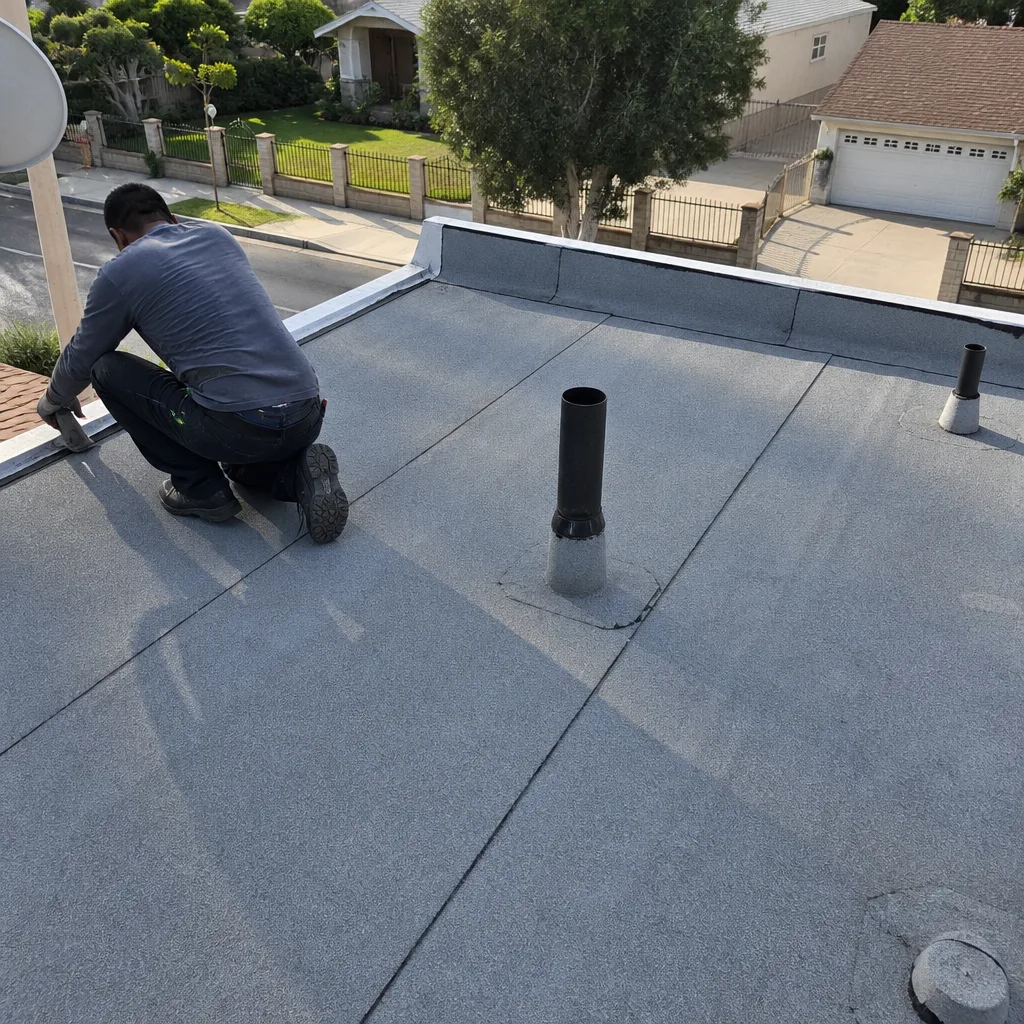
Vent pipes penetrate the roof to vent drain lines. They’re sealed with a rubber or neoprene boot that fits over the pipe. That boot cracks with age and UV exposure. The fix is straightforward – remove the shingles around the pipe, replace the boot, reseal. It’s one of the least expensive legitimate roof repairs, but only if caught early. Left alone, a cracked boot lets water run down the pipe and along the underside of the sheathing.
Walls and Headwalls
Where a roof plane dies into a side wall, step flashing is installed under the siding and over the shingles. If that flashing is missing, corroded, or improperly lapped, water gets in at the wall-roof junction. This is common on additions and dormers. In Inglewood’s older housing stock, we’ve found step flashing that was never installed, only caulked. Caulk shrinks. Flashing doesn’t.
Eaves and Drip Edges
Eave leaks are less common than penetration leaks, but they happen when water wicks back under the shingle at the roof edge. Drip edge metal prevents that wicking and should extend into the gutter. Missing drip edge or improperly installed drip edge allows water to work back along the underside of the shingle and stain the fascia or soffit.
How Inglewood’s Climate Shapes Roof Failures
Inglewood sits close enough to the coast to get marine layer moisture and far enough inland to bake under afternoon sun. That combination does specific things to roofs.
First, the marine layer deposits moisture on roofs overnight, even in summer. That moisture sits on shingle surfaces and flashing. When the sun burns through mid-morning, rapid heating causes expansion. Repeated daily cycles of dampness, heating, and cooling work on sealants, flashing, and shingle adhesive strips. In neighborhoods like Morningside Park and North Inglewood, where many homes date from the post-war building boom, original flashing and older sealants have had decades of this treatment. Hairline separations in flashing sealant are common in homes built before 1975.
Second, UV intensity degrades asphalt shingles faster on south-facing slopes than on north-facing slopes. A homeowner with a south-facing front roof and a north-facing back roof will see very different shingle condition from one side to the other. That’s normal, not a defect. But it means a complete roof evaluation should account for differential wear.
Third, the region’s occasional heavy rain – where a month’s worth of rain can fall in two days – tests marginal roofs abruptly. A slow leak that doesn’t show itself during light drizzle will become visible during a heavy storm. If you get a stain after the first major rain of the season, the leak has likely been present but inactive for months.
All of this matters for repair timing. A small flashing gap caught in October is a minor repair. That same gap after a three-day winter storm is an emergency and often a larger repair because the water has had time to damage sheathing and insulation. Scheduling an Roof Inspection in Inglewood before the wet season is the most cost-effective move a homeowner can make.
What Roof Repairs Actually Cost in Inglewood
Repair pricing in the Inglewood market ranges widely based on the failure type, roof accessibility, and material matching requirements. Here’s a realistic breakdown of what we see in 2025 and 2026:
- Small shingle repair (3 – 10 shingles): $350 – $750. Depends on roof pitch, height, and whether materials need to be matched.
- Vent pipe boot replacement: $250 – $500. One of the lower-cost legitimate repairs, but it requires removing and reinstalling surrounding shingles.
- Flashing repair at a chimney or skylight (one side): $600 – $1,400. Multiple sides add incrementally. If replacement flashing is needed, costs go up.
- Valley repair: $800 – $1,800. High water-flow area, more material and labor involved.
- Attic ventilation correction: $400 – $1,200 for typical vent additions or bath fan rerouting. This might be a separate conversation from the roof itself.
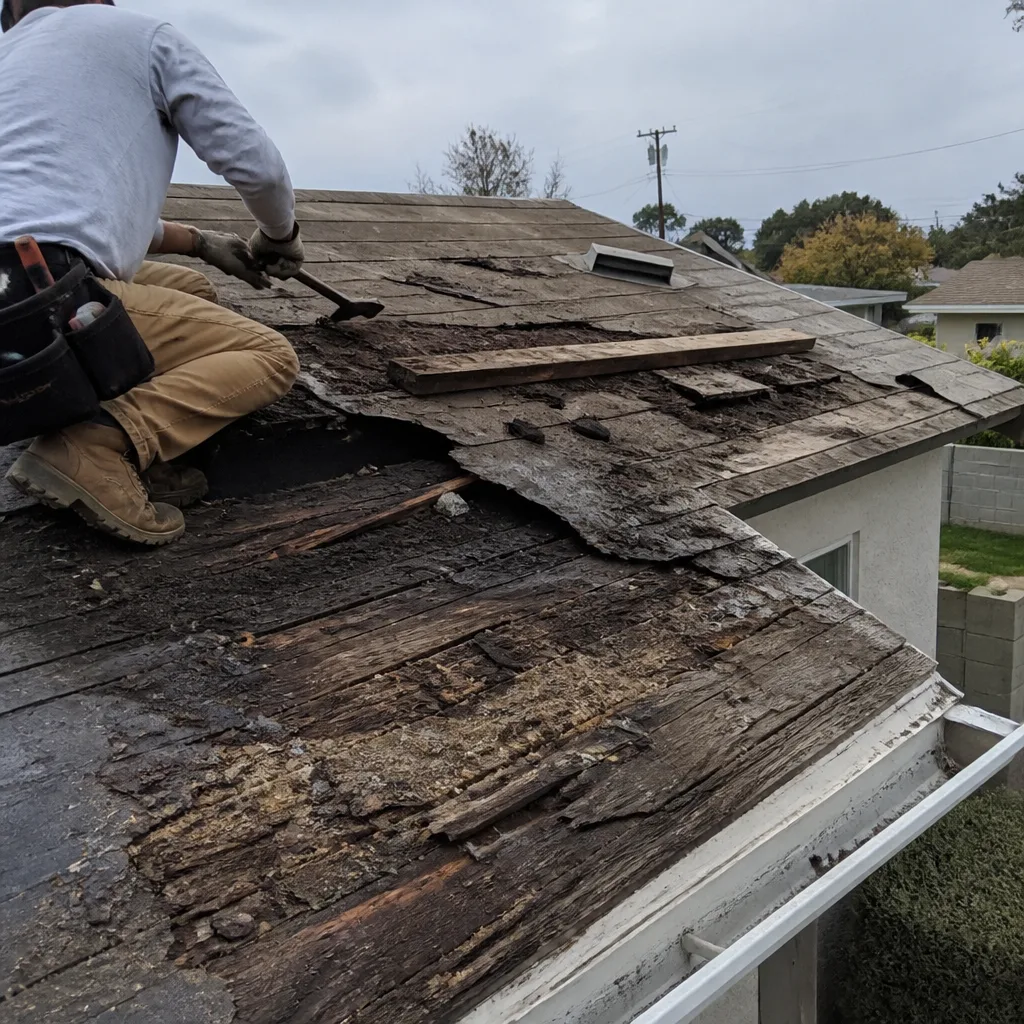
- Localized decking replacement (rotten sheathing under a leak): $500 – $1,200 on top of the shingle or flashing repair, depending on area size.
These ranges assume single-story homes with easy access. Multi-story homes, steep pitches, tile roofs, and repairs requiring a boom lift or scaffolding will push costs higher. The best way to get an exact number is an on-roof inspection with written line-item pricing. A quote that feels surprisingly low might mean the contractor hasn’t traced the leak path and is quoting for a patch under your visible stain, not the actual entry point. We’ve had to fix “repaired” leaks where the previous contractor sealed the inside of the attic and never touched the roof. That’s why roof inspection in Inglewood should always precede a repair quote.
Common Mistakes to Avoid
- Sealing from the inside. Spray foam and roofing cement applied to the underside of the sheathing don’t stop water at the source. The water is still getting in and now it’s soaking the decking from the top down. Inside sealing just hides the symptom and accelerates rot.
- Assuming the stain marks the entry point. As covered above, water travels. If a contractor quotes a repair without going into the attic or onto the roof to trace the path, walk away.
- Ignoring small curling or cracking because “it’s not leaking yet.” Shingles that are curling or cracked have lost their water-shedding integrity. They’ll hold until a heavy wind-driven rain finds the gap. Replacing a few damaged shingles early is far cheaper than repairing water-damaged sheathing later.
- Choosing the cheapest quote without checking the diagnosis. A low quote often reflects a shallow diagnosis. If two contractors quote $500 and one quotes $1,400 for the same visible symptom, ask each one to explain where the water is entering, not just what they’ll seal.
- Painting over a water stain immediately. A stain that returns after repainting means the water source is still active. Prime and paint after the repair is proven, not before.
- Forgetting the vents. If the problem is condensation, no amount of roof sealing will fix it. Check your attic ventilation and bath fan routing before paying for a leak repair.
- Delaying a flashing repair because the leak is “small.” Flashing failures don’t stay small. Each rain cycle works the gap wider. A chimney flashing issue caught in September is a $600 job. That same issue after a winter of storms might have damaged the sheathing around the chimney, tripling the cost.
When to Call a Professional
Some roof work is safe to assess yourself. Actually fixing it is another matter, especially on anything higher than a single-story roof or any repair involving flashing removal. If your stain is active, if you can see daylight through the decking, if the damage spans more than a handful of shingles, or if the leak involves a chimney, skylight, or wall junction, call a roofing contractor. Roof work involves heights, sharp tools, and the risk of making a small problem worse with an amateur patch. We recommend calling during or immediately after inspection, not after a leak has had weeks to spread. Chatham Roof Repair offers free estimates in Inglewood – call (866) 361-1724 to schedule one. We inspect first, trace the actual entry point, and give you a written repair plan that matches what the roof actually needs.
Frequently Asked Questions
Most roof repairs in Inglewood run between $350 and $1,800 depending on the failure type. Small shingle replacements and vent boot repairs sit at the low end; chimney flashing replacements and valley repairs sit at the high end. The best way to get an accurate number is an inspection with line-item pricing. Call (866) 361-1724 for a free estimate.
It can, and a good contractor will tell you that before work begins. If the inspection reveals rotten decking that couldn’t be seen until shingles were removed, that’s an additional cost. We quote in writing and flag any potential additional work during the inspection so there are no surprises. A contractor who promises a fixed price while admitting they haven’t inspected the roof fully is guessing.
Most repairs in Inglewood finish in a single day. A shingle replacement or vent boot swap takes an hour or two; a flashing replacement might take half a day. Larger repairs, like valley replacements or multiple flashing sides, can run a full day or spill into the next. Weather and material matching can affect timing. We’ll give you a realistic window before starting.
Yes, if the contractor has access to the manufacturer and product line. We install products from GAF, CertainTeed, Tamko, and Boral, among others, which allows us to match replacement shingles in profile and color for older roofs where the original product is still available. If the original shingle is discontinued, we’ll recommend a close-match alternative and be clear about the difference before you approve anything.
A repair addresses a localized failure: a specific leak, a few damaged shingles, one failing flashing zone. Replacement addresses widespread wear: curling and cracking across most of the roof, heavy granule loss, multiple previous repairs, or an age beyond the manufacturer’s expected life. The honest test is whether the problems are isolated or systemic. We look for the repair before we recommend the replacement.
When a repair or replacement triggers the City of Inglewood’s permit requirements, we handle permits and inspections as part of the job. Some minor repairs don’t require a permit, and we’ll tell you if that applies. What we won’t do is tell you to skip a permit that’s actually required. Roof repair in Inglewood done without required permits creates problems when you sell the home.
The Bottom Line
Most roof problems have a visible symptom and a hidden source. The symptom is where the water shows up. The source is where it gets in. A repair that doesn’t address the source is a repair that will fail. Trace the path. Confirm the diagnosis. Match the fix to the actual failure type. In Inglewood, where climate cycles stress roofs with marine moisture and intense sun, early diagnosis saves thousands over the life of a home. If you’re dealing with a stain, a curled shingle, or a suspect flashing detail, call (866) 361-1724 and get a straight answer about what your roof actually needs – and what it doesn’t.
Written by the team at Chatham Roof Repair, serving Inglewood since 2016.
See the difference
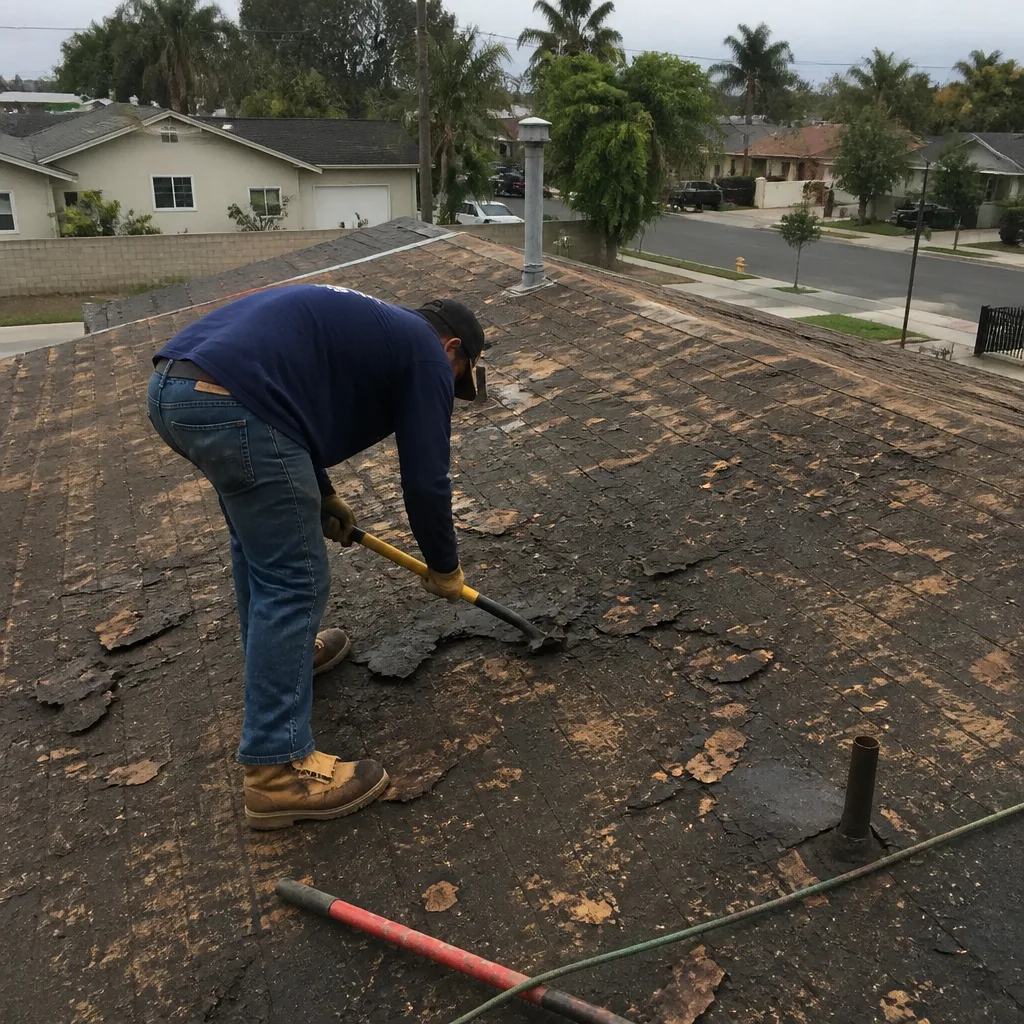 Before
 After
 Before
 After
 Before
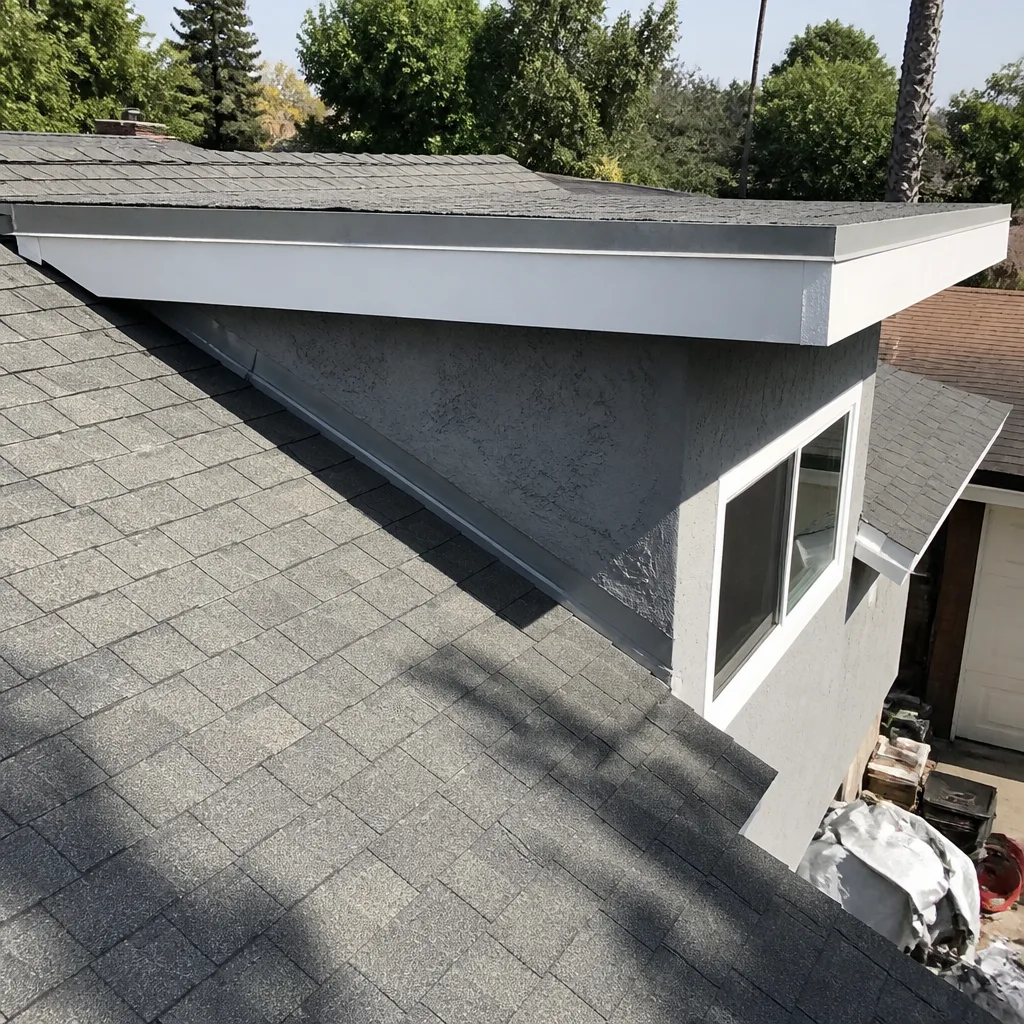 After