Last updated October 30, 2026
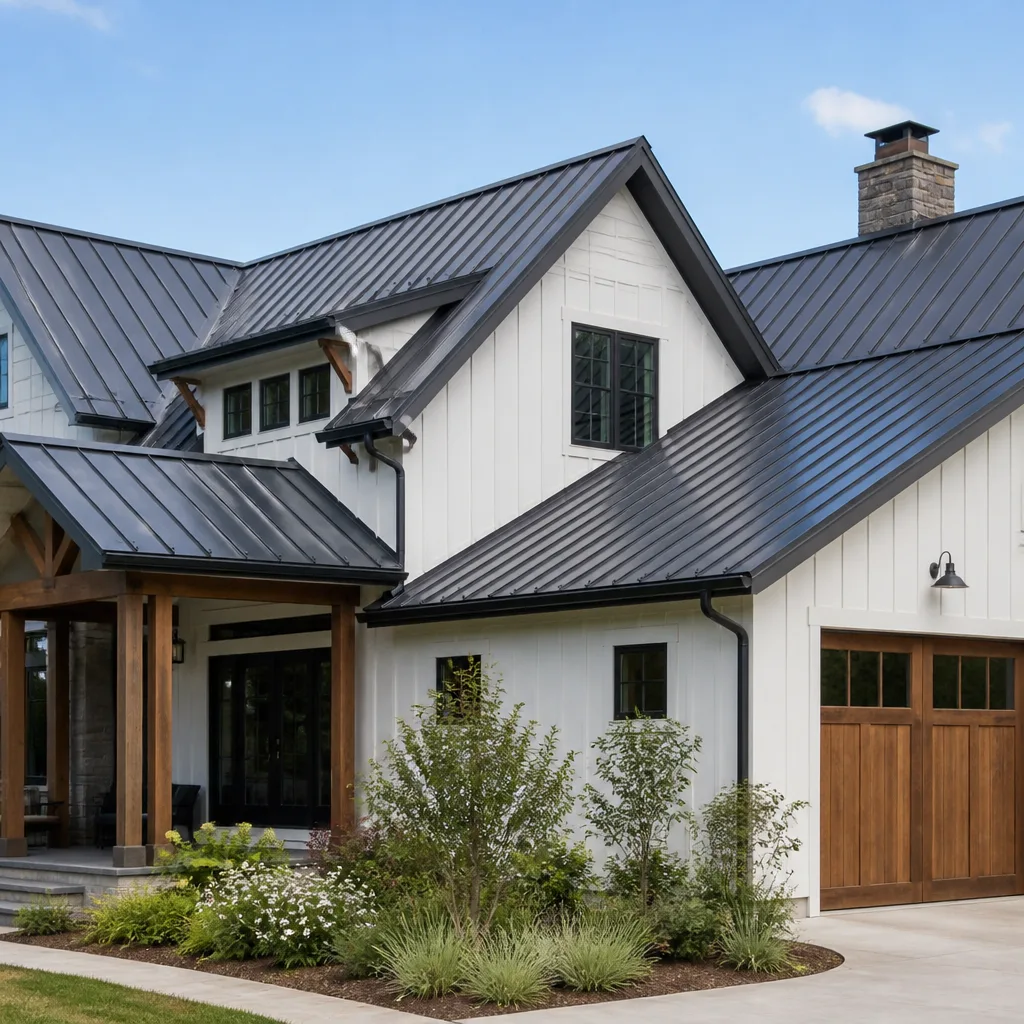 Metal roofing
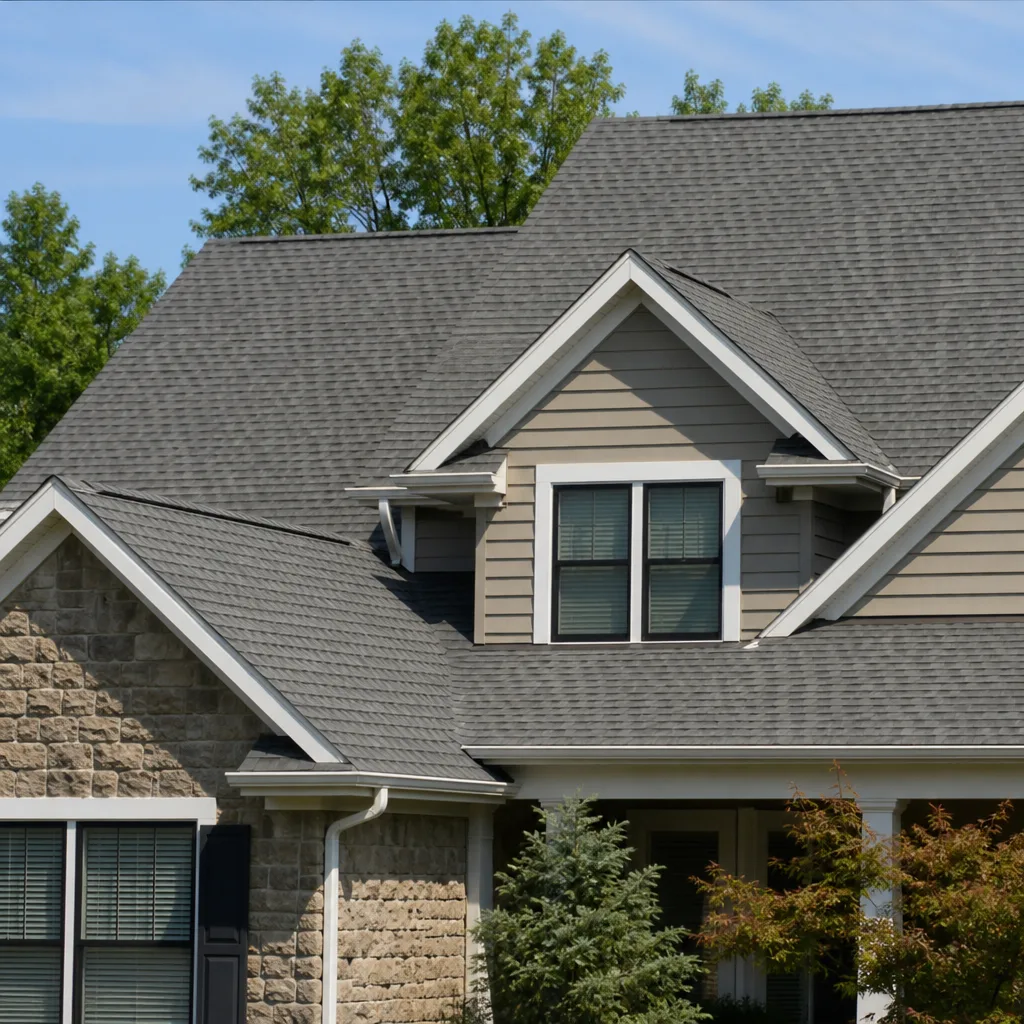 Architectural shingles
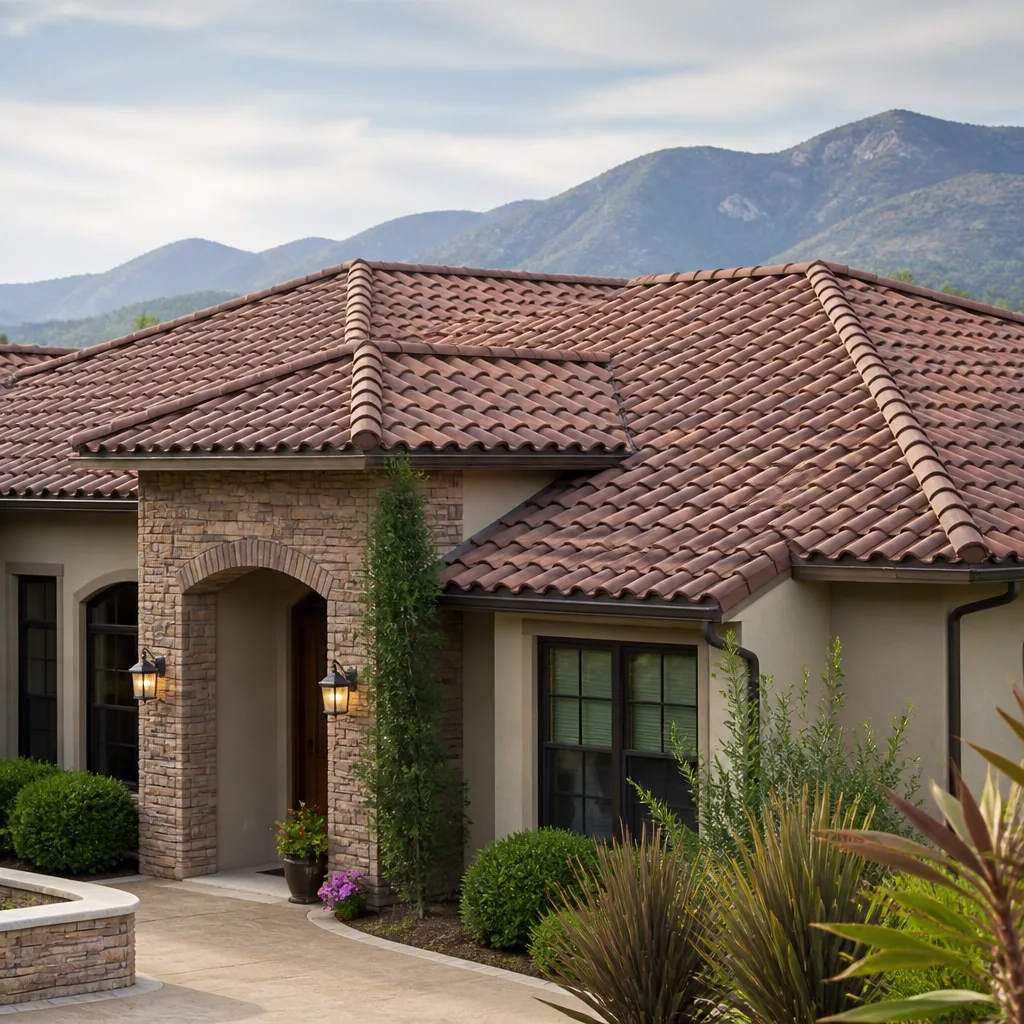 Tile roofing
 GAF
 Owens Corning
 Flat & low-slope
Free roof inspection with deck photos before we talk money - GAF and Owens Corning certified installation
Roofing Emergency Preparedness Guide for Inglewood Homes
After a major Santa Ana wind event, Inglewood emergency roofing contractors are typically booked 5 to 10 days out. Read that again: five to ten days. That’s the window between a wind gust ripping shingles off your roof and a crew actually standing on top of it. The homeowner who hasn’t pre-identified a contractor, documented their roof’s pre-event condition, or staged basic temporary protection materials will be waiting out that window with an open structure while rain clouds gather over the Baldwin Hills. This guide covers what the other homeowner already knew: how to document before damage happens, how to protect your home in the first 24 hours, how to navigate insurance without making costly mistakes, and how to distinguish a true emergency from a problem that can wait until the rush clears.
Quick Answer
Roofing emergency preparedness in Inglewood means three things: documenting your roof’s condition before storm season starts, staging tarp and fastening materials so you can cover exposed areas within hours of damage, and having a pre-vetted licensed roofer’s contact information on file before you’re competing with thousands of neighbors for the same 5-to-10-day repair window. For a deeper look at year-round maintenance timing, see our Seasonal Roofing Care for Inglewood: Year-Round Homeowner’s Guide. The homeowners who fare best after Santa Ana wind events are those who treat roof documentation and contractor selection as annual maintenance items, not panic decisions made at 9 p.m. with rain starting to fall.
Styles & brands we work with
Table of Contents
- Document Your Roof Before the Emergency
- What Emergency Tarping Actually Requires
- Pre-Vetting a Contractor Before You Need One
- The Insurance Claim Sequence for Inglewood Roofing Emergencies
- Emergency-Critical vs. Urgent-But-Not-Emergency Damage
- Why Inglewood’s Climate Pattern Makes Timing Predictable
- Common Mistakes to Avoid
- When to Call a Professional
- Frequently Asked Questions
Document Your Roof Before the Emergency
Most Inglewood homeowners document their roof’s condition about 48 hours after discovering damage. That’s too late. An insurance adjuster reviewing a claim needs to see what the roof looked like before the wind event to establish that damage was event-caused rather than age-related. Without pre-event documentation, you’re effectively arguing from a position of no evidence, and the adjuster’s default assumption will be that the missing shingles, lifted flashing, or cracked tiles were already failing.
What should you document? Not just “the roof looks fine” from the street. The documentation that supports a claim is specific, dated, and close-range:
- Dated photographs of every roof slope from at least two angles, in morning light when edge lifting and granular loss are visible. Use a ladder if you’re comfortable on one, or a drone if you’re not. Photos from the street will not show the condition of the ridge caps, valleys, or flashing that actually fail in high wind.
- Close-range shots of flashing at penetration points: plumbing vents, furnace vents, skylights, chimneys. These are the first failure points in Santa Ana conditions, and the spots where water enters weeks later.
- Gutter and downspout condition photos. Wind-driven debris and rain expose gutter weaknesses. Having a dated record of intact gutters before the event prevents the adjuster from attributing interior water damage to pre-existing drainage failures.
- Attic interior photos showing the underside of the roof deck. Look for dark staining, daylight visible through gaps, or rusted nail points. These tell the story of the roof’s internal condition, which is invisible from the exterior.
- Measurement records. Know your roof’s approximate square footage and the underlayment type if you’ve had work done previously. An adjuster’s software will estimate the roof area from satellite imagery, and having your own measurements means you can catch underpayment before you sign anything.
The most common mistake we’ve seen is homeowners photographing only the front slope facing the street, with a phone camera from 40 feet away, at 4 p.m. on a bright day. That documentation tells an adjuster almost nothing about the roof’s true condition. Documentation that supports a claim requires you – or a professional – to get close enough to see individual shingle edges, flashing seams, and the actual condition of sealant at penetrations.
At Chatham Roof Repair, our roof inspections in Inglewood include a full photo and measurement record labeled with dates, intended to serve as the pre-event documentation baseline if you haven’t created one yourself. The inspection report becomes your evidence file. Even if you inspect the roof yourself every spring, having a licensed contractor’s dated report carries more weight with an adjuster than a homeowner’s cellphone photos.
What Emergency Tarping Actually Requires
Covering a damaged roof with a tarp that stays on through a Santa Ana event is not a matter of throwing a blue sheet over the ridge and hoping for the best. In a city subject to wind gusts exceeding 40 mph, an improperly secured tarp becomes either a parachute that tears the anchor points out of the deck, or a flapping mass that strips more shingles on its way off. The reason contractors book out 5 to 10 days after a major wind event is partly volume and partly that effective emergency tarping takes preparation and attention to detail that most homeowners cannot execute in the dark.
For a tarp to be effective in Inglewood conditions, it needs to meet a minimum standard:
- Minimum thickness of 6 mil. Anything thinner will tear under wind loading and pull. The 2- and 3-mil tarps sold at big-box hardware stores are not adequate for roof protection. They aren’t adequate for much beyond a weekend painting project.
- Ridge-over installation. The tarp must extend over the peak of the roof by a minimum of 4 feet on each side. Tarping only the damaged slope creates a seam at the ridge where wind gets underneath and lifts the entire assembly off.
- Mechanical fastening with wood anchor strips. A tarp that is merely weighted down with bricks or 2x4s will fail on the second wind gust. The attachment method that holds is: 1×2 or 2×4 wood strips screwed through the tarp into the roof deck at 12- to 18-inch intervals along every edge and along the ridge line, with roofing screws of sufficient length to penetrate the decking.
- Wrapped edges at eaves and rakes. Any loose tarp edge acts as a wind sail. The tarp must wrap around the roof edge and be anchored to the fascia, not just draped over the top and stapled in place.
We’ve seen homeowners think they’ve protected their roof with a $35 tarp weighted down with pavers, only to have it shred in the first nighttime gust and leave the house more exposed than it was an hour after the original damage. The tarp that fails is worse than no tarp at all because it gives a false sense of security during the hours when you could have arranged a proper emergency repair.
Which brings us to the practical reality: if you’ve staged materials and you’re physically capable of doing this work safely, a properly secured tarp is far better than nothing. But if the roof is steep, the damage is at the ridge, or you’re working from an extension ladder with winds picking up, that’s the moment to call a professional rather than risk a fall that turns a roof problem into a hospital admission. Chatham Roof Repair provides emergency roof protection services as part of our roof repair work in Inglewood, and our crews carry the right mil thickness, anchor strips, and fasteners rather than improvising from what’s on the shelf at the closest hardware store.
Pre-Vetting a Contractor Before You Need One
The worst time to select a contractor is during the emergency itself. When a roof has a hole in it and rain is forecast, the homeowner is no longer making a careful evaluation. They are making a hire based on who answered the phone first, who showed up fastest, and who talked the most confidently. That selection process rewards salesmanship over competence, and it is exactly how Inglewood homeowners end up with half-done emergency patches that fail to keep water out, followed by a full replacement quote that bears no resemblance to what the roof actually needs.
The alternative is to pre-vet a contractor now, while the sun is out and the pressure is off. Here’s the framework to have on file before you ever need emergency service:
- Verify the contractor’s CSLB license. The California Contractors State License Board website allows you to look up any roofer by name, license number, or business name, and it shows the license status, issue and expiration dates, workers’ compensation status, and any disciplinary actions or complaints. A roofer operating without a license in California is not a contractor. They are a handyman with a truck, and if they fall off your roof, your homeowners insurance is your only protection.
- Confirm 24-hour contact capability – and test it. Many roofing companies list an emergency number that rolls to voicemail after 6 p.m. When the Santa Ana winds hit at 3 a.m., you need a company whose emergency line actually gets answered, or at minimum returns calls within an hour. Test the number before you need it: call on a Sunday evening and see what happens.
- Request the company’s specific emergency response procedure. Ask what happens when you call with storm damage: who shows up first, what equipment they bring, what initial tarping costs, and how soon the permanent repair follows. If a company can’t articulate this process clearly, the process doesn’t exist.
- Verify the roofer handles both repair and replacement. Not all roofing companies do both. A replacement-only company will recommend replacement, because that’s what their business model supports. A repair-only company may lack the capability to handle full replacement if the damage warrants it. Our model at Chatham Roof Repair handles inspection, repair, and replacement under one roof, which means the recommendation you receive is based on the actual condition of the roof, not on what we happen to sell. We look for the repair before we recommend the replacement.
- Ask about material options before you’re in a rush. Some contractors install one brand and one brand only. If that brand’s shingle doesn’t match your existing roof in profile or color, you’ll accept a mismatch or you’ll replace more roof than the damage required. At Chatham Roof Repair, we install products from seven major manufacturers – GAF, CertainTeed, Owens Corning, IKO, Atlas, Tamko, and Boral – which means repair patches and replacement products can be matched to the existing roof system rather than forcing a product mismatch. Seven major brands; you choose the product that fits your roof, your budget, and your warranty goals.
Pre-vetting doesn’t mean you’ve committed to anything. It means you’ve established who you’ll call, confirmed they answer the phone, and verified they’re licensed and capable. When the emergency happens, you call that number, not the first sponsored listing on a panic search. The difference in outcome is measurable, and the difference in cost is frequently thousands of dollars.
The Insurance Claim Sequence for Inglewood Roofing Emergencies
Insurance claims for roof damage follow a predictable sequence, and the first 24 hours set the trajectory for the entire process. Acting out of sequence, or saying the wrong thing to the wrong person, can reduce a legitimate claim to a partial denial or a lowball settlement. Here’s the sequence that protects your position:
First 24 Hours: Document and Mitigate
- Photograph everything before touching anything. Exterior damage, interior water stains, displaced materials, the condition of the yard and roof around the house. The photos you take before cleanup begins are the best evidence you’ll ever have. Take more than you think you need. Take photos from every angle, in both wide shot and close-up.
- Perform emergency mitigation only. Move furniture away from active leaks. Place buckets under drips. If you’ve staged tarping materials and can do so safely, cover the exposed area. Do not – and this is where many claims go wrong – begin tearing out damaged drywall, pulling up carpet, or removing your own roof shingles for a “better look” before the adjuster arrives. Anything you remove before documentation can be attributed to you, not the storm.
- File the claim online or by phone within 24 hours. Inglewood homeowners with standard HO-3 policies have a duty to report damage promptly and to prevent further damage. The first call is where you establish the claim number and get the adjuster’s name. Do not speculate about cause. Do not say “the roof was old anyway.” Do not use the words “probably,” “maybe,” or “I think it’s been like that a while.” State factual observations: wind occurred on this date, we observed this damage on this date, we are taking these mitigation steps.
When the Adjuster Arrives
The adjuster assigned to your claim works for the insurance company. Their employer’s financial interest is in settling claims for the least amount that doesn’t trigger a lawsuit. That doesn’t make them dishonest; it makes their job description. You should approach the conversation with that understanding.
Never describe the roof’s age as a contributing factor. Never volunteer pre-existing conditions that you’ve noticed over the years. Answer the adjuster’s questions directly and factually, and do not fill silence with speculation. If the adjuster asks whether the roof was leaking before the storm and you say “well, there was that small stain in the guest bedroom a couple years ago,” you’ve just handed the insurance company a reason to attribute the current damage to aging rather than the wind event. The time to be candid about prior conditions with a licensed contractor is before you’re trying to establish event-caused damage.
When your roofer is present during the adjuster’s visit – and you should arrange for this – the roofer documents the same conditions from a contractor’s perspective and, crucially, can point out damage the adjuster might have missed. Adjusters miss things because they’re working through a high volume of claims after a wind event. A roofer who’s walking the roof with the adjuster can point to damage at ridge caps, flashing seams, and deck seams that aren’t visible from the adjuster’s usual vantage point.
When to Involve a Public Adjuster
A public adjuster is a licensed professional who works for you, not the insurance company, and is compensated as a percentage of the claim settlement – typically 10% to 20%. Involving a public adjuster makes sense in two situations: when the insurance company’s settlement offer is clearly below the cost of the documented repairs from a licensed contractor, or when the claim is complex enough – multiple interior rooms involved, structural damage, displacement – that the documentation and negotiation burden exceeds what you can manage. For a straightforward missing-shingles claim with clear event documentation, a public adjuster’s percentage may not be justified. For a claim where the insurance company attributes storm damage to long-term wear and offers $8,000 against $22,000 in contractor estimates, a public adjuster can pay for themselves.
One detail that matters more than homeowners expect: your roofer’s line-item estimate is the document that anchors the negotiation. A lump-sum estimate that says “replace roof, $19,500” gives the adjuster nothing to work with and gives you no basis to contest an underpayment. A written line-item scope of work that breaks out material quantities, underlayment requirements, flashing counts, deck repair, and waste disposal costs gives you and the adjuster a common reference point. At Chatham Roof Repair, we provide written, line-item scopes of work for exactly this reason. Detail is leverage.
Emergency-Critical vs. Urgent-But-Not-Emergency Damage
One of the most expensive mistakes an Inglewood homeowner makes in the 48 hours after a wind event is treating every roof problem like a five-alarm structural emergency and paying accordingly. The rush to fix everything immediately leads to paying premium rates for non-emergency work and accepting the first quote given. Distinguishing emergency-critical damage from urgent-but-not-emergency damage protects your budget and ensures the truly critical issues get addressed first.
Emergency-Critical: Active Structural Exposure
- Open roof deck with visible daylight from the attic interior. If you can see sky through the roof from inside the attic, water entry is immediate and unavoidable. This is a true emergency.
- Missing sections of underlayment with decking exposed to weather. Shingles protect underlayment; underlayment protects the deck and the interior. If the underlayment is gone and the deck is visible from above or below, the structure has no remaining weather barrier.
- Active water intrusion into the home’s interior – water running down walls, pooling on floors, or saturated ceiling drywall. Active intrusion means the roof’s protective layers have been breached and every hour of rainfall adds to the interior damage total.
- Structural sagging or visible deck deflection. If a section of the roof plane appears to be dipping or bowing compared to adjacent sections, the support structure beneath may be compromised. This requires immediate professional evaluation.
Urgent-But-Not-Emergency: Compromised, Not Breached
- Lifted or curled shingle edges that haven’t torn free. The underlayment beneath may still be intact and keeping water out. This is a priority repair, but it is not a rain-imminent catastrophe.
- Compromised flashing at a vent, skylight, or chimney where the flashing is bent or partially separated but the penetration seal hasn’t fully opened. These are common Santa Ana casualties. They’ll leak in heavy rain if left unaddressed, but you have days, not hours.
- Minor granule loss exposing the asphalt mat without cracking or tearing. This shortens shingle life and indicates aging, but it doesn’t create an immediate leak.
- Small punctures or penetrations – a branch through a shingle, a single missing shingle tab – that expose a small area of underlayment but haven’t produced interior water entry. Small enough to cover with an emergency patch; not large enough to warrant a full emergency response.
- Documenting after the damage rather than before. The before-photos are the evidence that establishes causation. After-photos alone put you in an argument with the adjuster about whether the damage pre-dated the event. The absence of documentation is not neutral; it works against you.
- Assuming the street view tells you anything. The majority of Santa Ana roof damage occurs at ridge caps, valleys, flashing penetrations, and the upper slopes. None of these are visible from the driveway. A ground-level inspection after a wind event gives false reassurance.
- Using a hardware-store tarp with bricks and expecting it to hold. Inglewood’s wind gusts exceed what a non-anchored tarp can withstand. The tarp that blows off in the second gust leaves you unprotected during the exact hours you thought you were covered.
- Hiring the first available contractor without verifying the CSLB license. This is how unlicensed operators get the job, and an unlicensed roofer’s fall off your roof becomes your liability exposure. Verify the license number on the CSLB website before you sign anything, not after.
- Removing damaged materials before the adjuster sees them. Tearing out wet drywall, pulling up water-damaged flooring, or removing torn shingle remnants from the yard before the adjuster documents them reduces your claim’s evidence base. Photograph first. Mitigate minimally. Wait for the adjuster before the demolition phase.
- Accepting a lump-sum quote without a line-item breakdown. The adjuster will compare your contractor’s number against their own estimate. A line-item scope of work gives you the detail to push back when the insurer’s number is low. A single number gives you no reference point at all.
- Treating every roof problem as an emergency requiring immediate action. Paying emergency-premium rates for urgent-but-not-emergency issues costs the homeowner money they didn’t need to spend. Learn to distinguish active structural exposure from compromised-but-intact conditions, and allocate your urgency budget accordingly.
The rule we use in our Inglewood repair work: if the home’s interior is protected by an intact water barrier, you have time to get multiple estimates and make a measured decision. If the barrier is breached, you need a contractor on the roof as soon as possible, and the urgency premium is worth paying. Panic overspending happens when the homeowner can’t tell the difference. The documentation process we outlined earlier helps, because you’ll know what the underlayment looked like before the event and whether the barrier is still there.
Why Inglewood’s Climate Pattern Makes Timing Predictable
Inglewood’s roof damage doesn’t arrive randomly. It follows a pattern that any homeowner can use to their advantage. The Santa Ana winds – those hot, dry, north-easterly flows that gust through the passes and accelerate down the mountain slopes – are the primary driver of roofing emergencies in this city. They arrive with enough force to lift shingle tabs, tear off ridge caps, loosen flashing at penetrations, and convert mature trees into wind-driven projectiles. They typically occur between September and April, with the strongest events clustered in October and November. Learn to spot early trouble in our Roofing Warning Signs: A Inglewood Homeowner’s Reference Guide.
The insidious part of the pattern is the gap between cause and consequence. The wind damage happens during the Santa Ana event. The water damage happens weeks later, when the first meaningful rain arrives. A homeowner experiences a windy night in October, glances at the roof from the street the next morning, sees nothing alarming from that angle, and files the event away. When the January rains come and water shows up in the bedroom ceiling, the connection to October is established – but now the homeowner is filing an insurance claim months after the event, and the adjuster’s first question will be: “Can you prove the damage was caused by that specific wind event?”
This is why the documentation practice outlined earlier is an annual ritual, not an optional chore. If you photograph and inspect the roof every autumn, you have the evidence chain that connects cause to consequence across the gap. If you don’t, you’re arguing from assumption.
There’s a secondary pattern worth understanding: the post-wind-event rush creates a contractor availability bottleneck that lasts 1 to 2 weeks. Every Inglewood homeowner whose roof lost shingles is calling the same list of roofers at the same moment. The companies that answer are booking out 5 to 10 days, and the rates for emergency work during that window reflect the demand spike. The homeowner who pre-vetted a contractor and has an existing relationship – even if it’s just a prior inspection on file – is in a fundamentally different position than the cold caller. They’re a known client, their roof’s condition is documented, and their call is more likely to be prioritized.
The third element of Inglewood’s specific context: the city’s flat terrain and dense single-family neighborhoods mean that wind damage is often widespread across blocks rather than isolated to a single structure. When one house on the block loses ridge caps, the adjacent houses are likely damaged too. This matters for insurance claims because a widespread event produces a higher volume of similar claims, which means adjusters are processing more files and moving faster. It also means that if your neighbors are getting roof work done, the damage was likely event-caused, not isolated aging. When a full neighborhood is missing shingles after a wind event, denial arguments based on “pre-existing aging” lose credibility.
Common Mistakes to Avoid
When to Call a Professional
After any significant Santa Ana wind event, an inspection by a licensed roofer is the right next step, even if nothing looks wrong from the ground. The damage that matters is above your line of sight. If you see missing shingles, lifted edges, displaced flashing, visible decking from the attic, or interior water staining, call a contractor the same day. If the damage is extensive enough that you’re considering tarping, call a professional rather than improvising from an extension ladder in windy conditions.
Chatham Roof Repair offers free estimates in Inglewood – call (866) 361-1724 to schedule a roof inspection or discuss emergency protection for a damaged roof. Inspection, repair, or full replacement – one company, start to finish. Our team provides roof replacement in Inglewood when damage exceeds what a repair can responsibly address, and we carry the material options from seven manufacturers to match the aesthetic and warranty profile of your existing roof rather than forcing a mismatch.
Frequently Asked Questions
Emergency tarping in Inglewood typically runs $300 to $600 for a single penetrations or small damaged area when done by a licensed roofing contractor, with larger areas of damage running toward the upper end or beyond depending on roof accessibility, slope, and the amount of material and anchoring required. The cost is influenced by whether the crew needs to remove damaged material first, the roof’s pitch, and the difficulty of the anchor points. Insurance policies generally reimburse emergency tarping costs as part of a covered claim, so keep your receipt and document the work with photos. Call (866) 361-1724 for a specific quote for your roof.
Standard HO-3 homeowners policies in California cover wind damage as a named peril, meaning that damage caused by a Santa Ana wind event is covered unless your policy specifically excludes wind or you’ve purchased a reduced-coverage policy. The practical question is not whether wind is covered, but whether you can document that the wind caused the specific damage being claimed. Pre-event photos, dated inspection records, and a contractor’s professional assessment all support causation. A claim filed without documentation invites the adjuster to attribute the damage to age and wear instead.
Photograph the damage from every angle before touching anything, move valuables away from active leaks, place buckets under drips, and then call your insurance company to file the claim and request an adjuster assignment. If the barrier is breached and you can safely cover the area with a properly anchored tarp, do so, but do not remove any damaged materials or begin repairs beyond mitigation until the adjuster has documented the scene.
A licensed roofer’s inspection is the only reliable way to distinguish a repairable roof from one that needs replacement. As a general framework, isolated damage to shingles, flashing, or ridge caps is almost always repairable, while widespread shingle failure, deck rot, or underlayment deterioration across multiple slopes points toward replacement. At Chatham Roof Repair, we evaluate the roof’s condition first and let the findings dictate the recommendation. We look for the repair before we recommend the replacement, and our capability across both means you get the recommendation the roof needs, not the one the business model prefers.
Inglewood building codes require roofing work to comply with the California Building Code and local amendments, including requirements for underlayment type, fastener schedule, and fire-rated roof coverings in wildfire-adjacent zones. Any repair or replacement done without a permit when a permit is required creates problems when you later sell the home or file a future insurance claim. A licensed contractor will know when a permit is triggered and handle the paperwork. Unlicensed operators won’t, and the liability falls entirely on you. For specifics on permits and inspections, read Roofing Permits, Codes & Inspections in CA: What You Need to Know.
Waiting to take action because the damage doesn’t look serious from the ground. Santa Ana wind creates a gap between cause and consequence: the shingles lift in October, and the leaks appear in January. Homeowners who document the roof immediately after the wind event and call a roofer for an inspection are positioned to make insurance claims and schedule repairs before the secondary water damage compounds the original problem. Homeowners who wait until the rain comes are now handling a larger claim, with more interior damage, and competing for contractor availability at the worst possible moment. Call (866) 361-1724 for a free inspection if you suspect recent wind damage.
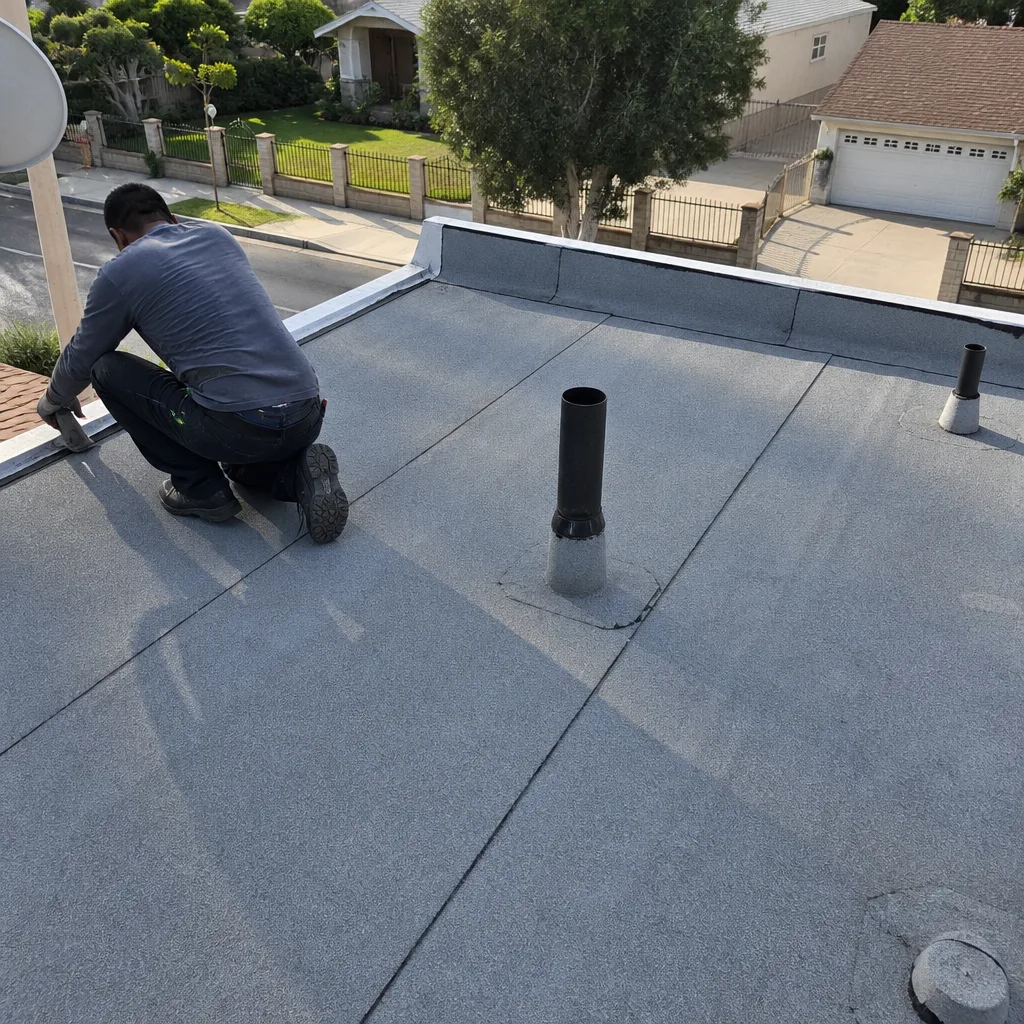
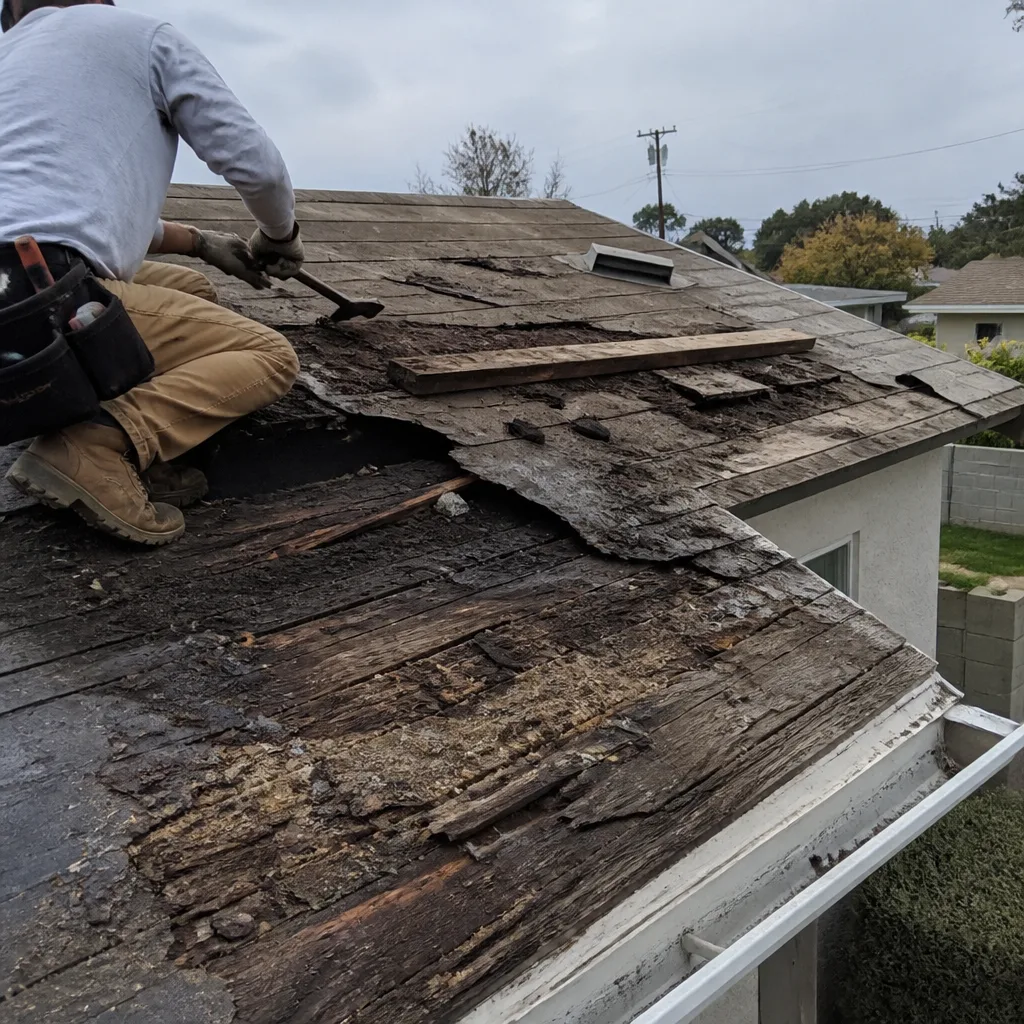
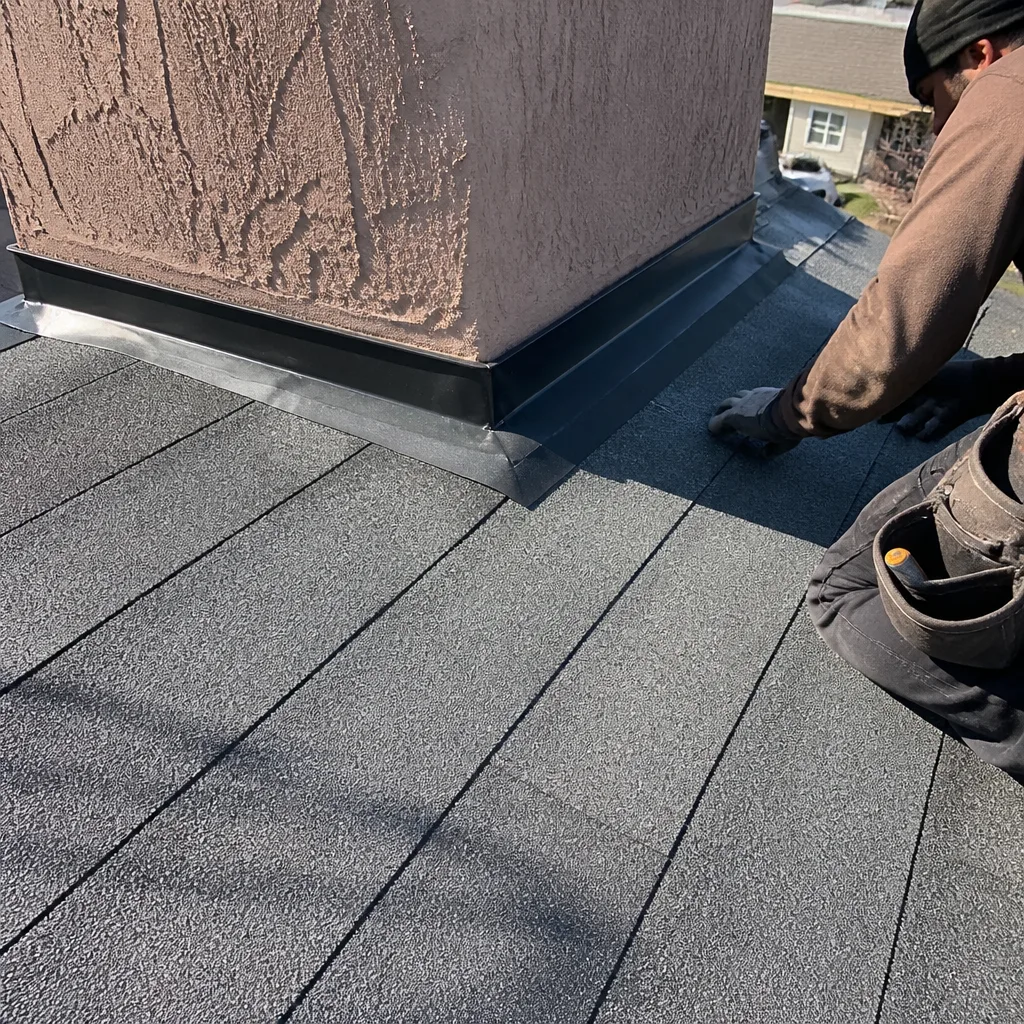
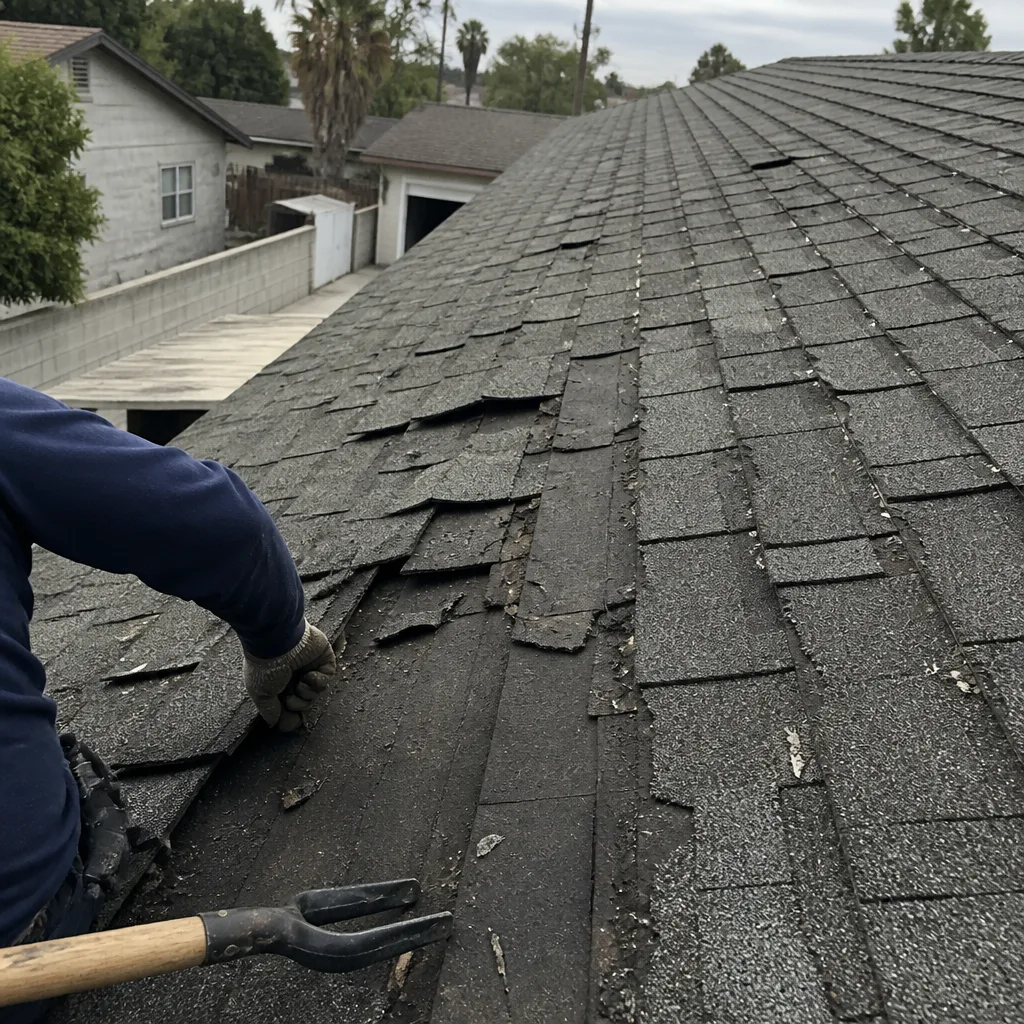
See the difference
 Before
 After
 Before
 After
 Before
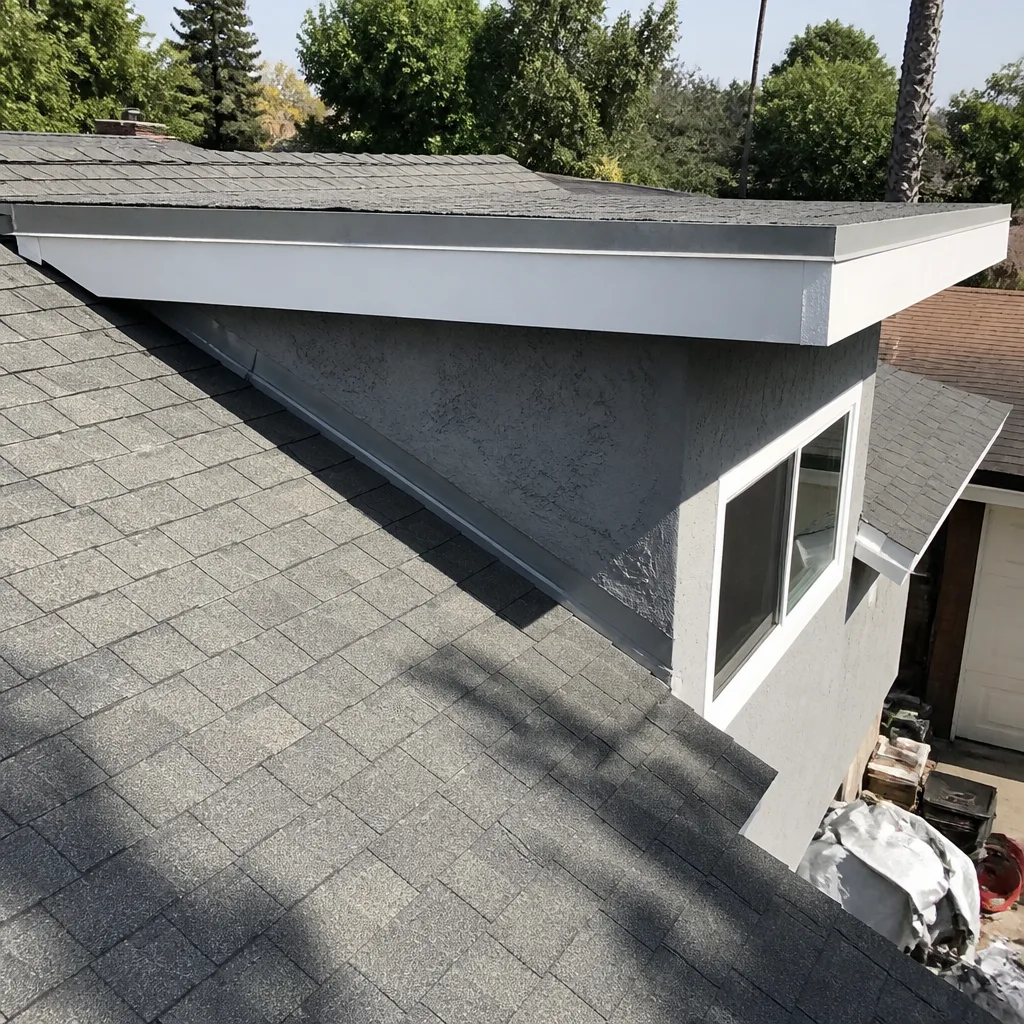 After
The Bottom Line
Roofing emergencies in Inglewood are not random events. They follow a pattern, and the pattern is exploitable by the homeowner who acts before the wind rather than after it. Document the roof every autumn with dated photos and measurements. Pre-vet a licensed, repair-capable contractor and test their emergency line. Stage a 6-mil tarp, wood anchor strips, and roofing screws. When the Santa Ana winds come through, photograph the damage immediately, file the claim within 24 hours, and mitigate without removing evidence. Distinguish true emergencies from urgent-but-stable problems so your urgency budget goes where it’s actually needed. The homeowners who navigate a wind event with the least financial damage are not the ones who got lucky. They’re the ones who prepared. Explore more guides & resources on our blog.
Chatham Roof Repair: Your Inglewood Emergency Partner
At Chatham Roof Repair, we handle the full life cycle of a roof: inspection to pinpoint problems, repair to address them precisely, and full replacement when the roof’s condition warrants it. We operate roofing as our only trade, not as one of a dozen services, so every hour of our experience is concentrated on roofs like yours in Inglewood. Our material roster spans seven major manufacturers, including IKO, Atlas, Tamko, and Boral, along with GAF, CertainTeed, and Owens Corning – which means when repair work is needed, we can match the existing shingles in profile and color rather than forcing a patch that looks like a patch. We provide written, line-item scopes of work that hold up in insurance negotiations, and we’re licensed, insured, and bonded for your protection. If you’re preparing your roof for the next Santa Ana season, or if recent winds have left you wondering what’s actually up there, call us at (866) 361-1724 to schedule a free estimate. From our home base, the Chatham Roof Repair home team has served Inglewood homeowners through every failure mode the wind and weather can deliver – and we’ll help you meet the next one on better footing.
Written by the team at Chatham Roof Repair, serving Inglewood since 2016.